

Making the Most of Winter Daylight in Mývatn
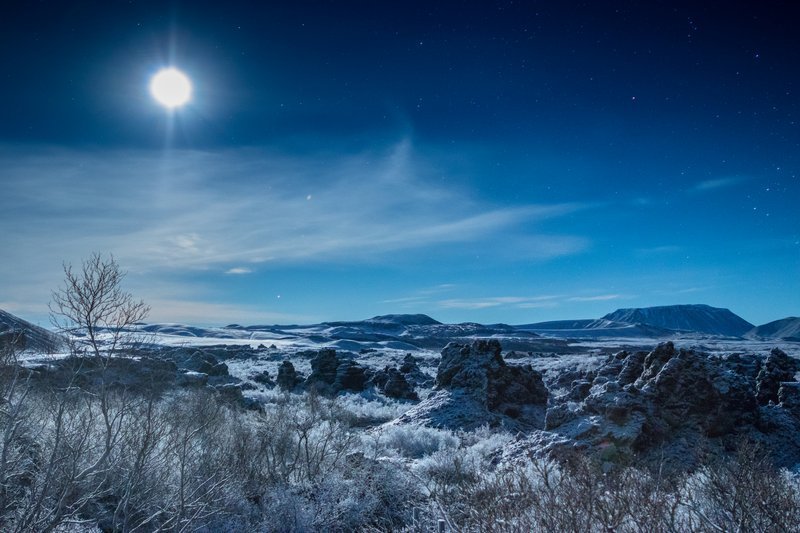
A Winter Day in Mývatn: From Daylight to Northern Lights
Winter days in Mývatn are short, especially in December and January, when there are only a few hours of daylight. But that doesn't mean you have to cut your sightseeing short. By planning around Iceland's winter daylight hours, you can enjoy a variety of experiences without feeling rushed. Here's how to organise your day around Lake Mývatn and make the most of the changing light throughout winter.
Winter Daylight Hours in Iceland by Month
Iceland's high latitude and proximity to the Arctic Circle mean daylight hours vary considerably throughout the year. In winter, the sun rises later and sets earlier, bringing shorter days and longer nights across the country.
The shortest days occur around 21 December, during the winter solstice, when Iceland receives approximately three hours of daylight. From then on, the days gradually grow longer, giving visitors more time to enjoy winter activities around Lake Mývatn.
Here's how sunrise, sunset, and daylight hours in Iceland change throughout winter:
|
Month |
Hours of daylight |
Sunrise (start → end) |
Sunset (start → end) |
|
November |
4.5–8 hours |
09:00 → 10:40 |
16:50 → 15:25 |
|
December |
3–4.5 hours |
10:40 → 11:20 |
15:20 → 15:15 |
|
January |
4.5–7 hours |
11:15 → 10:05 |
15:15 → 16:50 |
|
February |
7–10 hours |
10:00 → 08:30 |
16:55 → 18:25 |
|
March |
10–13.5 hours |
08:25 → 06:35 |
18:30 → 20:00 |
Times are approximate, showing the beginning and end of each month.
Late November and December bring increasingly short days, so focus on one or two nearby Mývatn attractions before sunset. January remains cold and snowy, but daylight gradually increases. By February, longer afternoons make it easier to enjoy winter activities such as dog sledding and snowmobiling. March offers even more time for sightseeing and longer walks, although snow and icy conditions can continue.
Golden Hour, Blue Hour & the Belt of Venus
Mývatn's winter daylight can feel like one long golden hour, with the low sun casting soft, warm light across the landscape. Even after sunset, the sky doesn't turn dark immediately. Twilight lasts longer at this high latitude, with beautiful colours appearing around sunrise and sunset.
During these periods, you may notice two striking natural phenomena:
- Blue hour: During twilight, particularly around nautical twilight, the landscape takes on cool, deep blue tones. This creates beautiful conditions for winter photography, although visibility is limited.
- Belt of Venus: Closer to sunrise or sunset, during civil twilight, a soft pink band may appear above the horizon opposite the sun. The Earth's shadow forms a darker blue band beneath it, creating a striking contrast with the surrounding sky.
These lighting conditions can make winter days feel a little bit longer than the official daylight hours suggest. Enjoy the changing colours during scenic stops, but save longer walks for daylight when visibility is better.
Morning: Start With Mývatn's Winter Landscapes
Winter mornings in Mývatn start slowly, especially in December and January when the sun rises late. Make use of the darker hours with breakfast at local spots like Mylla Restaurant, Vogafjós Cowshed Café, or Eldey Restaurant, which serve breakfast from around 07:00 or 08:00.
After breakfast, head out as the morning sky begins to brighten. On clear mornings, you might catch the blue hour, Belt of Venus, or sunrise over the snowy landscape.
Start with attractions near your accommodation to avoid spending too much daylight driving around the lake:
- For those staying north or east of Lake Mývatn: Explore the snow-covered lava formations at Dimmuborgir or admire Hverfjall's volcanic crater from its base.
- For those staying south of Lake Mývatn: Visit Skútustaðagígar for views of the volcanic pseudocraters or head to the panoramic viewpoint near Höfði Nature Reserve.
Choose one or two nearby stops rather than trying to cover the entire lake in one morning.
Midday: Make the Most of the Brightest Hours
Midday is an ideal time for longer outdoor activities, especially during the darkest winter months. If you're visiting in December, choose one main activity to make the most of Iceland's winter daylight hours.
Depending on weather, snow conditions, and availability, options include:
- Dog sledding with Snow Dogs
- Horseback riding with Eyjadalsá
- Snowmobiling with Mývatn Snowmobile
- Cross-country skiing around Lake Mývatn
- Exploring Lofthellir Ice Cave with Geo Travel
- Downhill skiing and snowboarding at Krafla ski area
- Visiting Hverir to see steaming vents and bubbling mud pools
- Seeing Arctic foxes in their winter coats at Daladýrð Petting Zoo
Guided activities can take several hours, so check departure times before planning additional stops. By February and March, longer daylight hours make it easier to combine outdoor adventures with sightseeing.
If you’re visiting in late February or early March, look out for the Mývatn Winter Festival, featuring winter sports and competitions. Depending on the year's programme and ice conditions, events may include horse racing, dog sledding races, ice fishing, and snowmobiling on frozen Lake Mývatn.
It is important in winter to check weather forecasts at vedur.is and road conditions at road.is before setting off. Allow extra travel time, as snow and ice can affect driving conditions.
Late Afternoon: Enjoy Geothermal Bathing and a Relaxed Meal
As daylight fades, it's a good time to slow down and enjoy experiences that don't require sunlight.
Earth Lagoon Mývatn is a relaxing option after a day outdoors. Soak in warm geothermal waters overlooking the snow-covered volcanic landscape, especially beautiful around sunset and twilight. You can also visit after dark and enjoy refreshments from the swim-up bar.
If you're visiting in early December, look out for the Yule Lads' annual bath at Earth Lagoon, usually around 16:00. If you miss their visit here, you can also meet the Yule Lads at Dimmuborgir around midday on selected December dates.
For dinner, stay at Earth Lagoon Bistro, which also hosts special themed evenings on Fridays and Saturdays until 20:30. Or check out dinner menus at local restaurants around Mývatn.
Local tip: If you’re visiting Mývatn around Christmas, try a traditional Icelandic Christmas buffet (jólahlaðborð), available at some restaurants as early as November. Check hotel restaurants such as Eldey and Mylla for seasonal menus.
By February and March, Iceland's winter daylight hours are longer. This gives you more time for sightseeing before heading to the lagoon or dinner.
Evening: Look for the Northern Lights Around Lake Mývatn
Mývatn's winter darkness, low light pollution, and wide-open landscapes make it a great place to watch the Northern Lights. There are plenty of aurora viewing spots around Lake Mývatn, although sightings depend on cloud cover and auroral activity.
You can head out on your own or join a guided Northern Lights tour with Geo Travel. Before setting off, check the Icelandic Met Office for cloud cover and aurora forecasts, and dress appropriately for winter.
Some accommodation options, such as Hotel Laxá and Berjaya Mývatn Hotel, also offer Northern Lights wake-up calls. So, you can be alerted if the aurora appears during the night. Keep your plans flexible, as the Northern Lights can appear at different times after dark and sightings are never guaranteed.
Enjoy Every Part of a Winter Day in Mývatn
There's something to enjoy at every stage of a winter day in Mývatn, even when daylight lasts only a few hours. Snow-covered landscapes, its frozen lake, geothermal bathing, and dark skies offer different experiences throughout the day.
The key is to plan around Iceland's winter daylight hours rather than following a packed schedule. Leave room for changing weather, and don't feel you need to see everything before sunset. If you have more time, consider staying a few nights to explore Mývatn without rushing.
FAQs
Does Iceland have 6 months of darkness?
No, Iceland doesn't experience six months of complete darkness. Although winter days are short, most of the country receives daylight throughout the year.
What is the shortest day in Iceland?
The shortest day occurs around 21 December, during the winter solstice. In Mývatn, daylight lasts approximately three hours, although the exact duration varies slightly each year.
Is Iceland too dark in December?
No, you can still enjoy sightseeing and outdoor activities in December. Mývatn receives around three hours of daylight near the winter solstice, with additional twilight before sunrise and after sunset.
Can you explore Mývatn after dark?
Yes, geothermal bathing, dining, and Northern Lights watching are enjoyable after-dark activities. For outdoor walks and general sightseeing, daylight is generally safer.
Is it safe to drive around Mývatn after dark in winter?
Winter driving around Mývatn is possible when roads are open and conditions are suitable. However, snow, ice, poor visibility, and changing weather require extra caution, so always check road conditions before travelling.
What time can you see the Northern Lights in Mývatn?
The Northern Lights can appear any time the sky is sufficiently dark, including early evening. Many visitors watch between 21:00 and midnight, but sightings depend on weather and auroral activity.