

Your Ultimate Travel Guide to Lake Mývatn in North Iceland
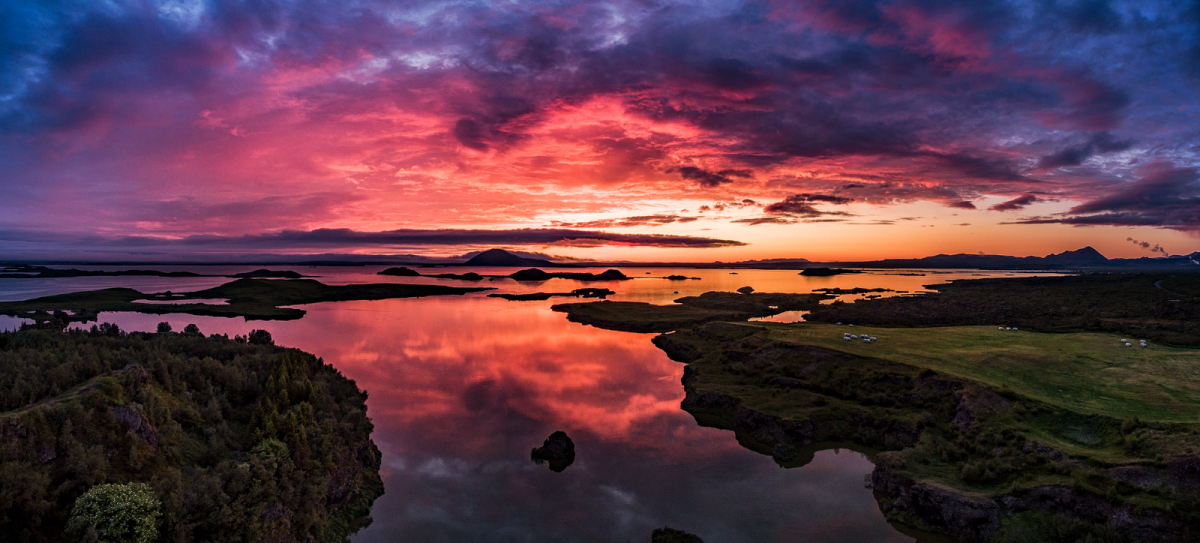
Located along Iceland’s famous Ring Road, Lake Mývatn is one of the most fascinating destinations in North Iceland. The area is known for its volcanic landscapes, steaming geothermal activity, lava formations, volcanic craters, and rich birdlife. It’s also one of the best places in Iceland to experience the Northern Lights during winter.
Despite its remote location, the Lake Mývatn area offers a wide variety of attractions within a short driving distance. Visitors can explore lava caves, soak in hot springs, hike crater mountains, and discover dramatic geothermal areas.
Whether you stay for a few days or stop along the way, Lake Mývatn offers nature, history, and adventure year-round.
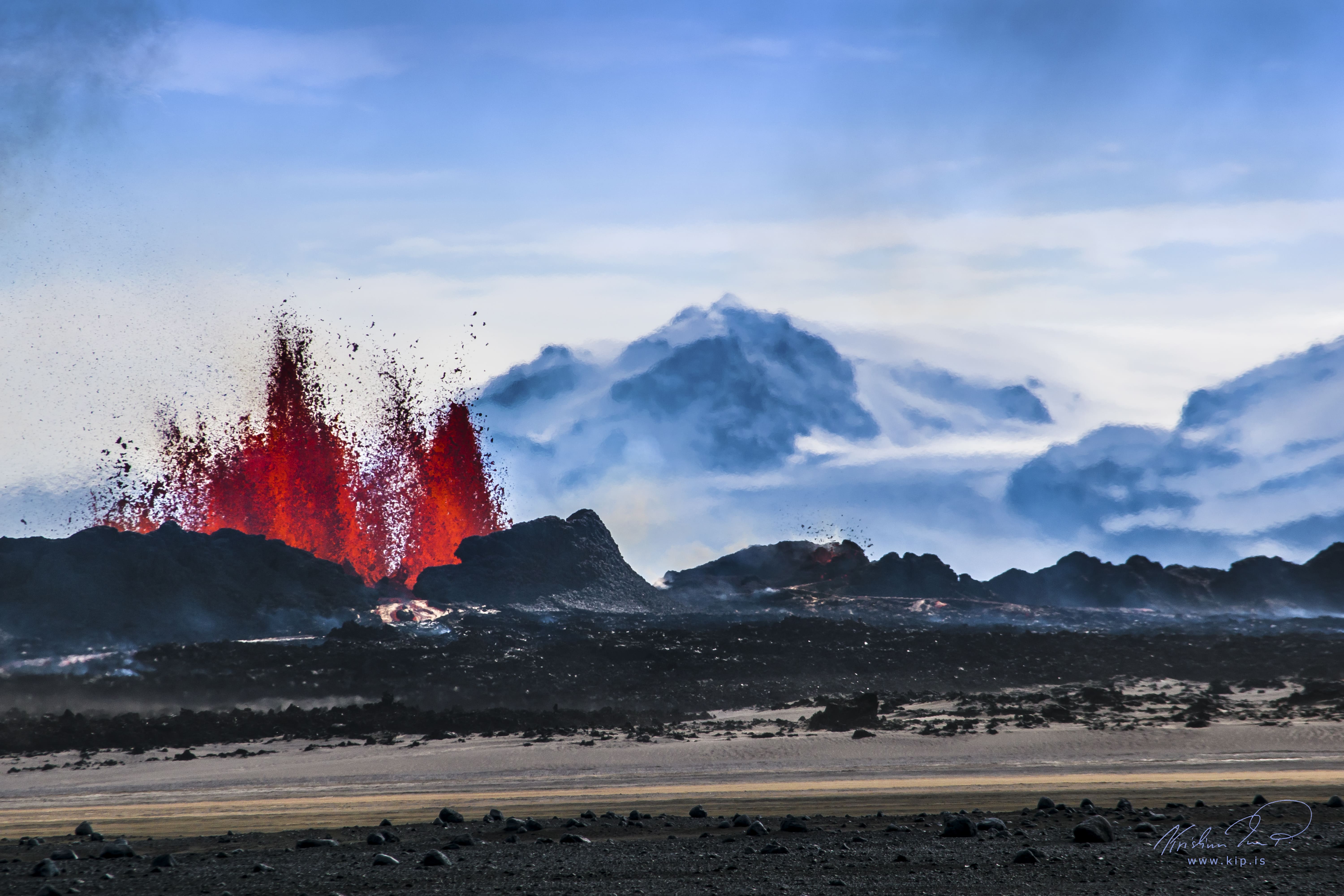
The earth is alive in Iceland, with constant movement in the earths crust. In the northern highlands, not far from Mývatn, this is Holuhraun eruption from 2014. You can see the fresh spread of black lava if you visit Askja caldera, which is close by.
A Brief Overview of Lake Mývatn and How It Formed
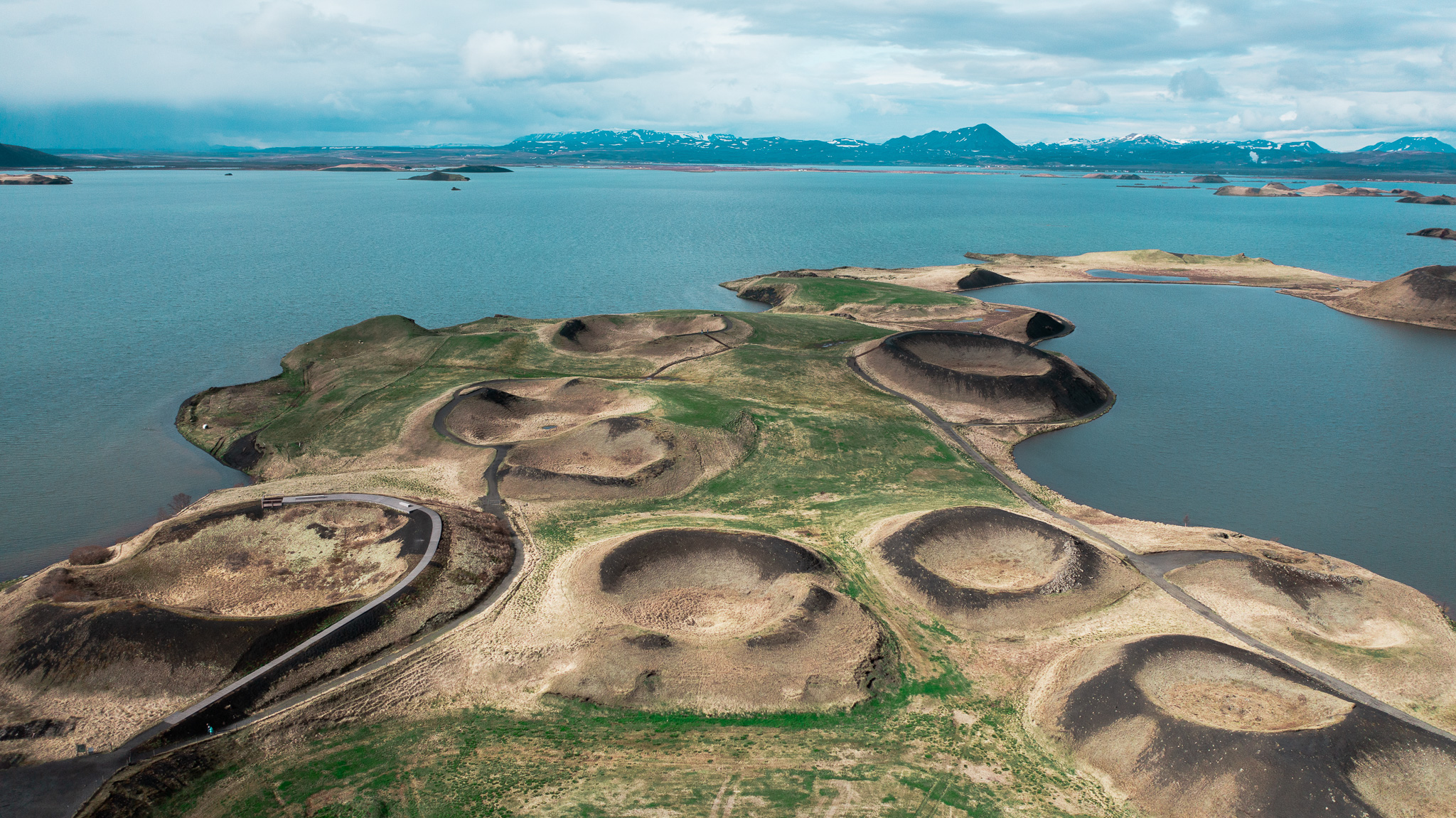
Lake Mývatn was formed around 2,300 years ago during a series of volcanic eruptions in North Iceland. As lava flowed across the landscape, it interacted with wetlands and underground water. This created steam explosions, lava formations, volcanic craters, and the unique terrain that surrounds the lake today.
The lake itself covers around 37 square kilometres, making it one of the largest lakes in Iceland. It measures approximately 6.5 kilometres wide and 8.5 kilometres long. Despite its size, Lake Mývatn is relatively shallow. It has an average depth of only 2.5 metres and a deepest point of around 4.5 metres. Thanks to this, sunlight can reach the lake bed, helping support the rich ecosystem found in the area.
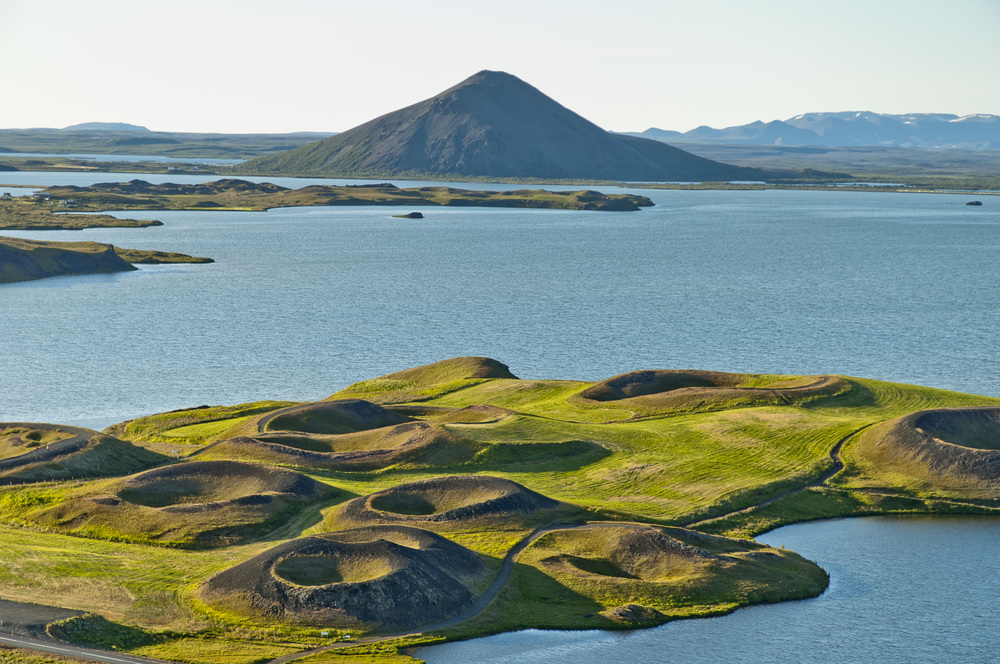
The name “Mývatn” means “Midge Lake”, referring to the midges that appear around the lake during summer. Although at times noticeable, these insects are an important part of the local ecosystem and support the area’s rich birdlife.
For centuries, people have settled around Lake Mývatn, mainly at Reykjahlíð, because of its fertile land, geothermal heat, and fishing opportunities. Today, the region is protected as part of the Mývatn–Laxá Nature Conservation Area. It’s recognised for its unique geology, volcanic activity, wetlands, and diverse wildlife.
Weather & Climate in the Lake Mývatn Area
The Lake Mývatn area experiences a subarctic climate with cool summers and cold winters. Weather conditions can change quickly throughout the year, so travellers should always be prepared for wind, rain, or sudden temperature changes.
Here’s what to expect about the weather around Lake Mývatn:
-
Average summer temperatures: Usually between 10°C and 15°C, with occasional warmer days during sunny periods.
-
Average winter temperatures: Commonly range from -5 °C to 5°C, although colder conditions can occur during storms and overnight hours.
-
Wind conditions: Wind can make temperatures feel much colder, particularly in exposed geothermal and volcanic areas.
-
Rain and snowfall: Rain is possible year-round, while snowfall is common between late autumn and early spring.
-
Daylight hours: Summer brings nearly 24 hours of daylight. On the other hand, winter offers limited daylight of around 4–6 hours per day, especially between November and January.
Regardless of the season, wearing waterproof outer layers, warm clothing, and sturdy walking shoes is recommended around Lake Mývatn. During winter, thermal layers, gloves, hats, and crampons or ice grips can also be useful.
Lake Mývatn Area Map & Top Attractions
Lake Mývatn is located in North Iceland, around 85 kilometres east of Akureyri. It’s a key stop along the Diamond Circle, which includes other famous North Iceland attractions like Dettifoss and Ásbyrgi Canyon.
Popular attractions around Lake Mývatn include Dimmuborgir lava formations, Hverir geothermal area, Hverfjall volcano, Grjótagjá cave, and Earth Lagoon Mývatn. Most are located within a short driving distance of each other along the Ring Road.
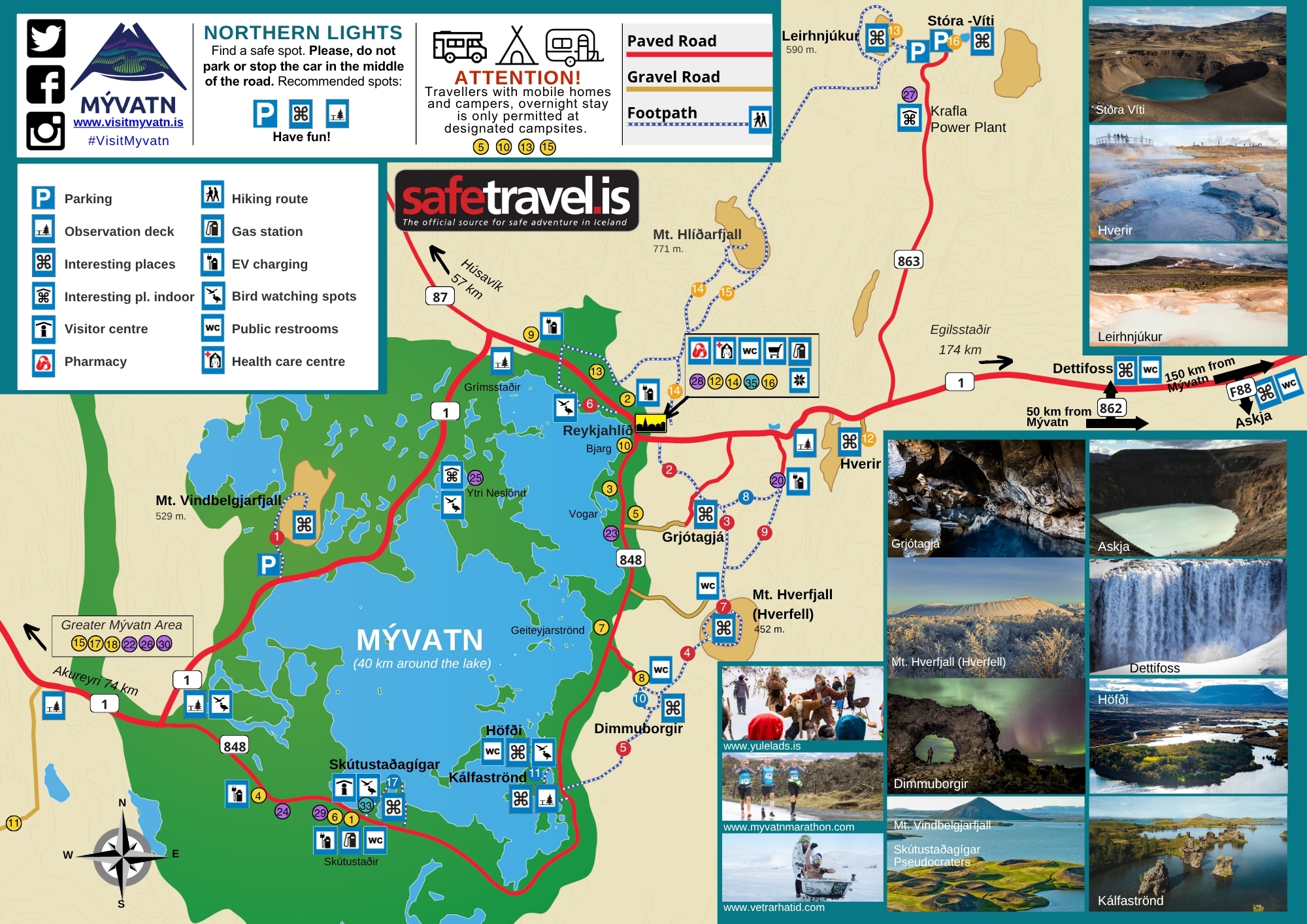
For detailed attraction guides and activity recommendations, read our complete guide to the best things to do in Mývatn
Nature and Wildlife at Lake Mývatn
Lake Mývatn is also known for its rich wildlife and unique ecosystem. The area is home to diverse birdlife, rare natural features, and excellent Northern Lights conditions during winter. As part of the Mývatn–Laxá Nature Conservation Area, the region remains one of the most important natural habitats in Iceland.
Northern Lights viewing at Lake Mývatn
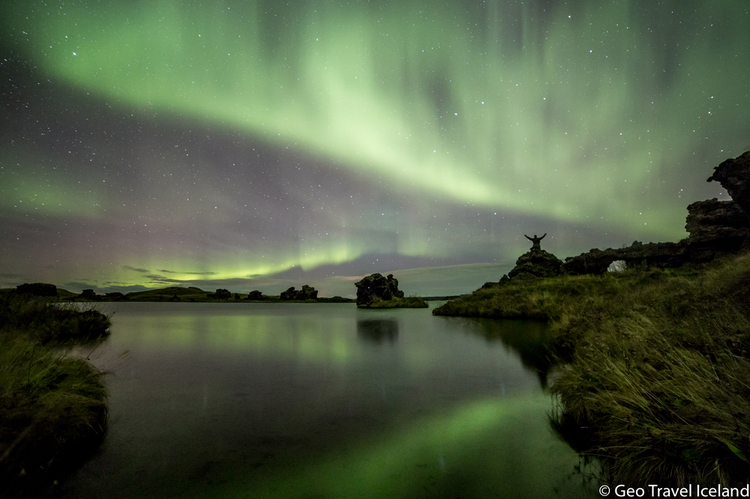
Lake Mývatn is often called the “Northern Lights Capital of Iceland.” Thanks to its low light pollution, clear winter skies, and open landscapes, you can expect excellent Northern Lights viewing conditions. From September until early April, you have high chances of seeing the aurora borealis during clear, cold nights.
For visitors wanting a guided experience, Geo Travel offers private and small-group Northern Lights tours in the Lake Mývatn area. Their tours also include photography guidance to help visitors capture the lights during favourable conditions.
Many hotels in the area, including Berjaya Mývatn Hotel, Laxá Hótel, and Sel-Hótel Mývatn, also provide Northern Lights wake-up calls. So, guests don’t miss the aurora during their stay.
Midges in Lake Mývatn
The word “Mývatn” means “Midge Lake”, so visitors should expect some insects during summer.
Midges (Chironomidae) are most common in warm weather, especially near wetlands and calm water. Fortunately, they don’t bite. Although they can sometimes be annoying, the insects are essential to the lake’s ecosystem and support the area’s famous birdlife.
Birdwatching at Lake Mývatn
Lake Mývatn is internationally known for birdwatching. In fact, the wetlands surrounding the lake support one of the largest populations of breeding ducks in Europe.
More than 15 duck species can be found here, including harlequin ducks, tufted ducks, greater scaup, and Barrow’s goldeneyes. Many migratory birds also return to the area between May and July, when nesting activity is at its peak.
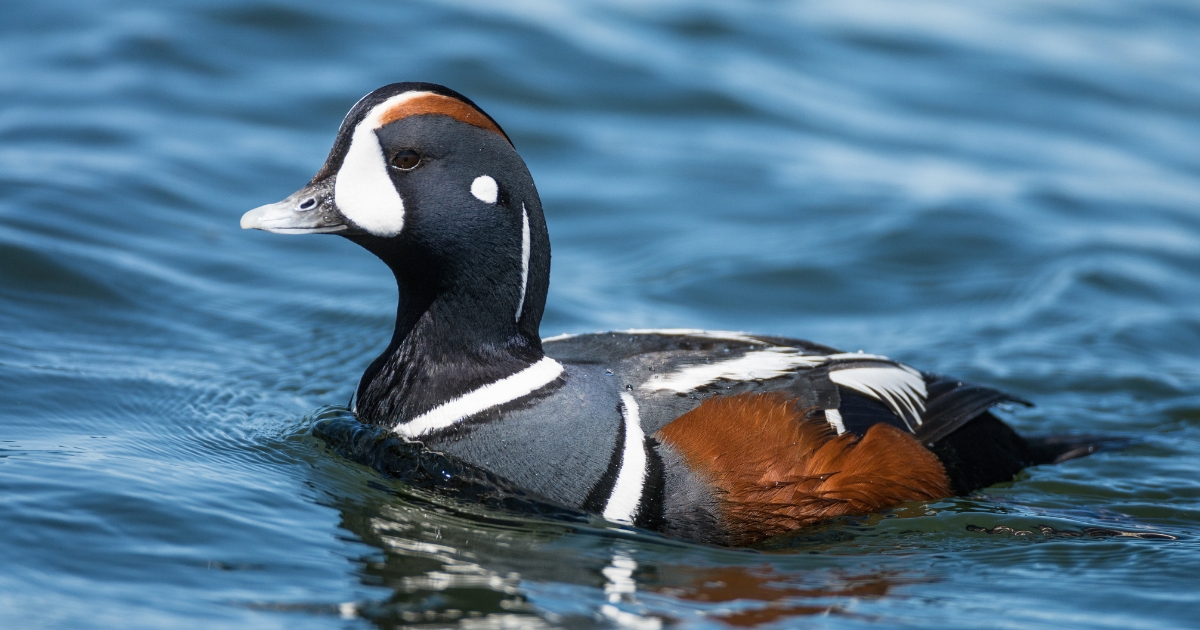
Birdlife in Lake Mývatn has played an important role in local culture for centuries. One long-standing tradition in the Lake Mývatn area is the sustainable harvesting of wild duck eggs on local farms. To protect bird populations, at least four eggs are always left in each nest for incubation.
Visitors interested in learning more about the region’s wildlife can visit Sigurgeir’s Bird Museum. The museum features exhibitions on local bird species, conservation, and the natural history of the Lake Mývatn area.
Marimo Moss Balls at Lake Mývatn
Marimo moss balls, also known as Cladophora balls, are rare green algae formations that grow naturally in Lake Mývatn.
These soft spherical algae once covered parts of the lakebed and became one of the area’s most unusual natural features. However, environmental changes have reduced their numbers significantly in recent years, causing them to become extinct in 2013.
Conservation efforts continue to protect the lake’s delicate ecosystem. And small marimo moss balls have slowly started forming again in recent years as environmental conditions improve.
Festivals and Events at Lake Mývatn Area
The Lake Mývatn area hosts a variety of seasonal events throughout the year. Depending on when you visit, here are some events and festivals you may be able to experience:
1. Mývatn Winter Festival
The Mývatn Winter Festival celebrates winter culture in North Iceland with outdoor activities, local food, music, and community events.
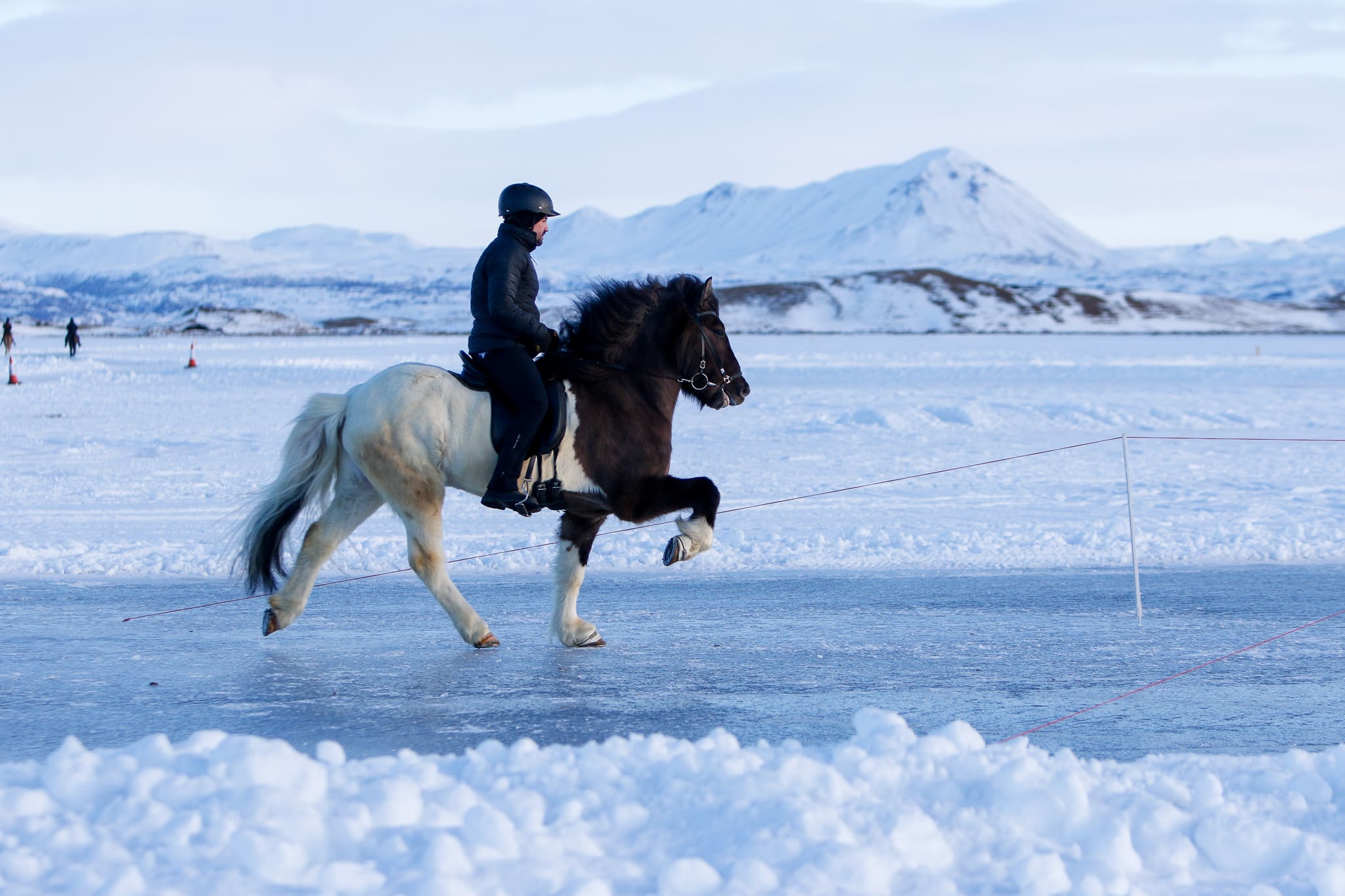
Visitors can experience a range of winter activities during the festival, including ice fishing, cross-country skiing, and Northern Lights tours. The programme also features popular events such as horses on ice and dog sledding competitions.
For travellers wanting to try dog sledding themselves, Snow Dogs offers guided tours through the winter landscapes around Lake Mývatn. Or if you want to glide across the snow, Mývatn Snowmobile provides a thrilling experience. Visitors can also join guided horseback riding tours in the snowy Bárðardalur valley with Hestaferðir á Eyjadalsá.
2. Mývatn Marathon
The Mývatn Marathon is one of the most popular sporting events in North Iceland and attracts participants from around the world. Held annually around 30 May, the event takes runners through volcanic landscapes, lava formations, and scenic routes surrounding Lake Mývatn. There are three distance options; full marathon, half marathon and 10k.
The festival weekend also includes several related events:
-
Mývatn Ring: A 42.2-kilometre cycling event held on the same day as the marathon, following an asphalt route around the lake.
-
The Lava Run: An off-road race held on 29 May, stretching 9.4 kilometres from Dimmuborgir to Earth Lagoon Mývatn.
All event tickets include complimentary entry to Earth Lagoon Mývatn. Access is typically valid on the day of the event or the following day.
3. Icelandic Yule Lads Annual Bath
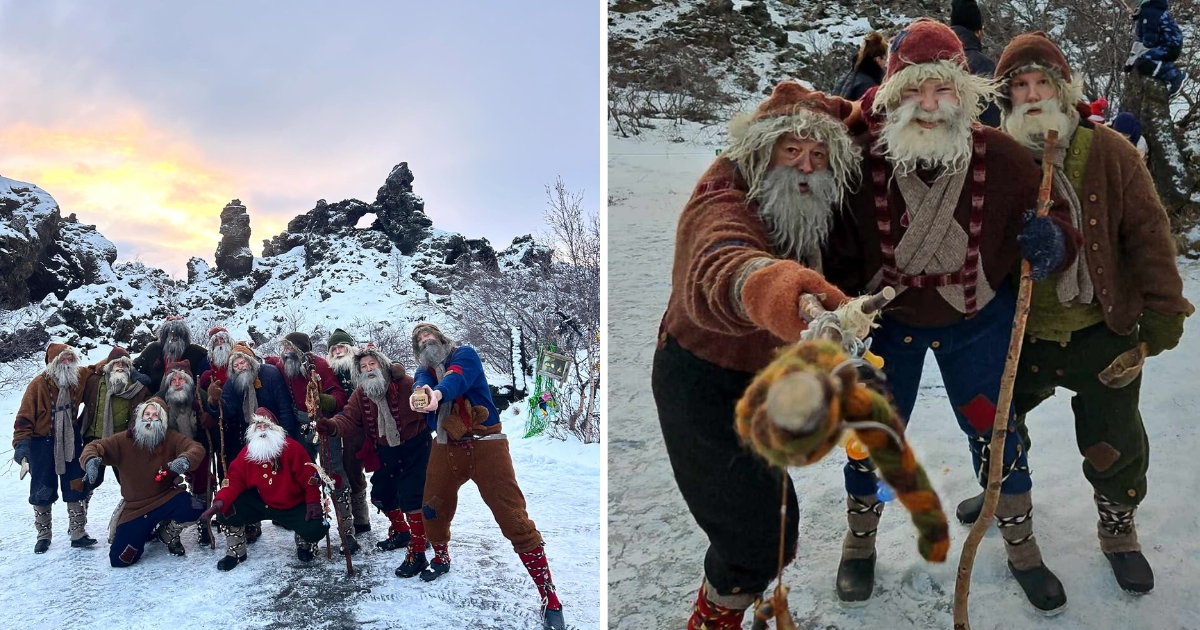
One of the most unusual yet fun winter traditions in the Lake Mývatn area is the annual Yule Lads bath. It’s traditionally held at the Earth Lagoon Mývatn, usually around 6 December. The event celebrates Icelandic Christmas folklore and gives visitors the chance to meet and even bathe alongside the Yule Lads.
From 6–23 December, you can also catch the Yule Lads in Dimmuborgir.
4. Mývatn Christmas Market at Skjólbrekka
The Christmas Market at Skjólbrekka features local crafts, Christmas goods, Icelandic food, and festive entertainment during the holiday season. It’s usually held on 6–7 December, during the same weekend as the Yule Lads annual bath and Dimmuborgir visit.
Visitors looking for local gifts and handmade items outside the market dates can also visit Dyngjan Gallery or Mývatn Market.
Where to Stay Near Lake Mývatn
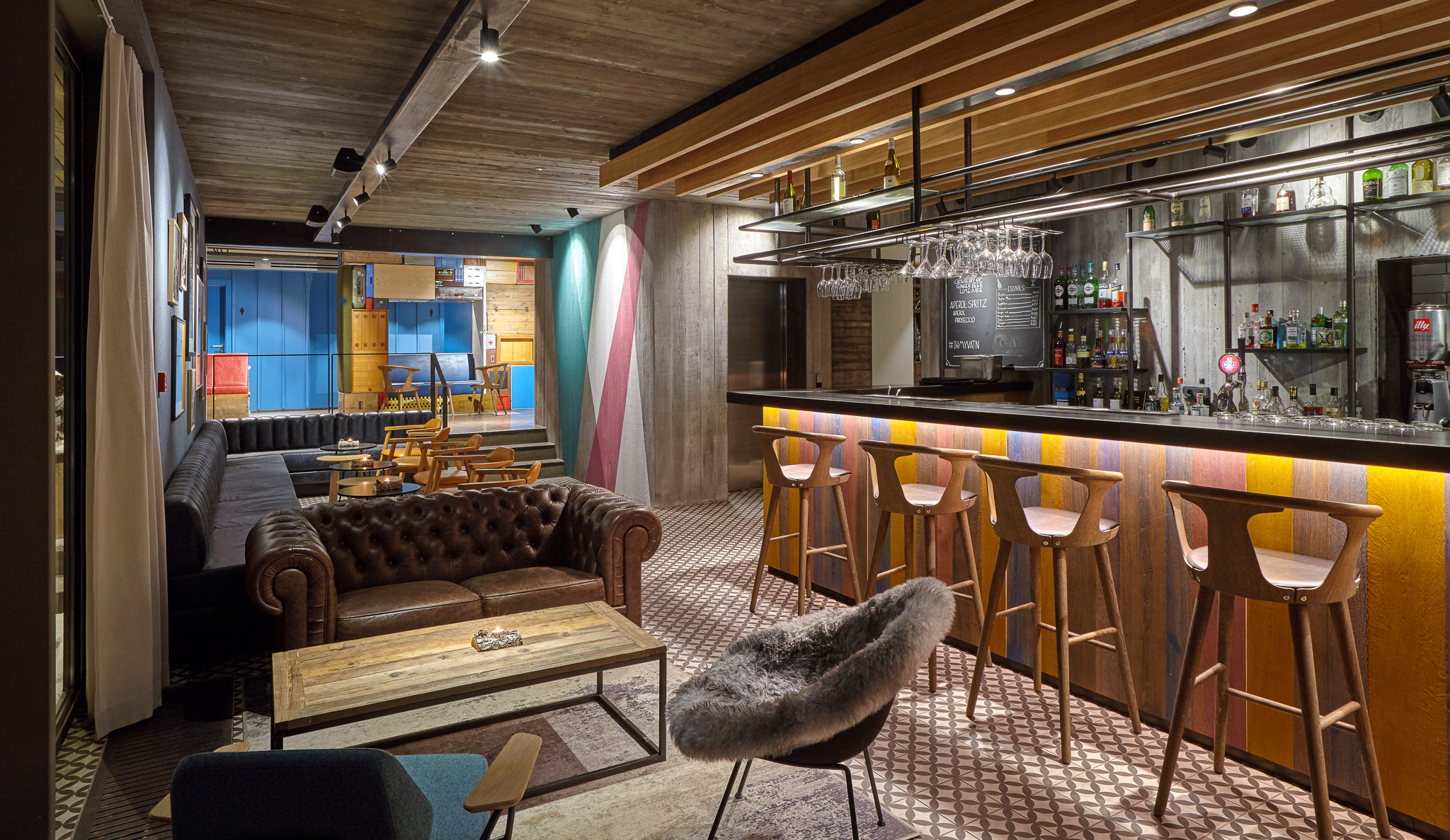
Most accommodation options around Lake Mývatn are located in or near the village of Reykjahlíð, the area’s main hub. Visitors can choose from luxury hotels, cosy guesthouses, cottages, campsites, and farm stays, all within easy reach of Mývatn’s top attractions.
Luxury Hotels
Visitors looking for more comfort and modern amenities can find several well-known hotels around Lake Mývatn. Some popular options include:
-
Berjaya Mývatn Hotel: A modern 4-star hotel near Reykjahlíð with comfortable rooms and easy access to nearby attractions.
-
Laxá Hotel: Known for its scenic surroundings and minimalist modern design overlooking the lake and the river Laxá.
-
Sel-Hótel Mývatn: A popular option with a restaurant, geothermal hot tubs, and a scenic location surrounded by the Skútustaðagígar pseudocraters.
Cosy Guesthouses & Campsites
For a quieter and more local experience, the Lake Mývatn area also offers a range of guesthouses, farm stays, and campsites. You can choose to base yourself at:
-
Vogafjós Farm Resort: A well-known farm stay featuring local food and lake views.
-
Vogar Travel Service: Offers cottages, campsites, and budget-friendly accommodation options.
-
Hlíð Camping & Guesthouse: A convenient guesthouse and camping ground located on the northern side of the lake.
-
Dimmuborgir Guesthouse: Comfortable cottages surrounded by lava formations and several Mývatn hiking routes.
-
Skútustaðir Farm Guesthouse: A peaceful countryside stay near the pseudocraters.
-
Guesthouse Stöng: A family-run accommodation with outdoor jacuzzis and peaceful surroundings.
-
CJA Guesthouse & Campsite: A practical option for travellers exploring the Ring Road and looking for quieter accommodation near Lake Mývatn.
-
Öndólfsstaðir B&B: A small countryside bed and breakfast with quiet surroundings.
Where to Eat Near Lake Mývatn
Despite its remote location in North Iceland, the Lake Mývatn area offers a good selection of cafés and restaurants. Whether you’re looking to try Icelandic or international cuisine, here are some dining options near Lake Mývatn to explore:
-
Vogafjós Cowshed Cafe: Famous for local dairy products and homemade Icelandic dishes.
-
Daddi’s Pizza: A casual and popular stop for pizza after a day of exploring.
-
Gamli Bærinn: Serves traditional Icelandic comfort food, coffee, and cakes at a reasonable price.
-
Mylla Restaurant: Offers a mix of Icelandic and European cuisine using local ingredients.
-
Kaffi Borgir: A family-run cosy café located near Dimmuborgir, offering lamb and goat dishes alongside geysir bread.
-
Kaffi Kvika (Earth Lagoon Bistro): Highlights local ingredients of the North, including fresh seafood, greenhouse-grown vegetables, Arctic herbs, and local dairy.
-
Bistro Sel & Pizza: A cosy spot where you can enjoy Icelandic dishes with draft beer.
-
Eldey Restaurant: Offers modern Icelandic cuisine with high-quality regional ingredients.

How to Get to the Lake Mývatn Area
There are several ways to reach Lake Mývatn, depending on your travel style and itinerary in Iceland.
By car
Driving is the most flexible way to explore the Lake Mývatn area. The region is located along Iceland’s Ring Road, making it a convenient destination for those exploring the entire island. It’s around 1 hour from Akureyri and approximately 6 hours from Reykjavík, depending on weather and road conditions.
Renting a car also makes it easier to visit nearby attractions across North Iceland and the Diamond Circle. During winter, a 4x4 vehicle is recommended due to snow and icy road conditions. Visitors looking to rent locally can also check Mývatn Car Rental for vehicle options in the area.
By plane
Travellers can take a 45-minute domestic flight from Reykjavík to Akureyri, followed by a drive or transfer to Lake Mývatn. Flights are available year-round and offer a faster alternative to driving from the capital region.
By bus
Travellers can also reach Lake Mývatn using Iceland’s public bus network operated by Strætó.
-
Bus route 57 runs between Reykjavík and Akureyri, with a journey time of around 6.5–7 hours.
-
From Akureyri, travellers can transfer to bus route 56, which travels towards Egilsstaðir and stops in the Lake Mývatn area. The journey takes approximately 1.5–2 hours.
Please note that Bus Route 56 doesn’t operate on Wednesdays and Thursdays. So, it’s important to check schedules in advance before travelling.
By guided tour
Many travellers visit Lake Mývatn through private or small-group guided tours available across the region. These tours make it easier to explore the area without having to worry about driving, logistics, or changing road conditions.
-
Geo Travel offers day tours around the Lake Mývatn area, including snowmobile tours, lava cave tours, hiking experiences, and buggy/ATV adventures.
-
Mývatn Tours operates excursions to Askja and the Icelandic Highlands during the summer season.
Want a private guided experience? Booking private tour guides like Kristinn Ingi Pétursson offers a more personalised journey around the Lake Mývatn area.
Driving & Road Conditions in the Lake Mývatn Area
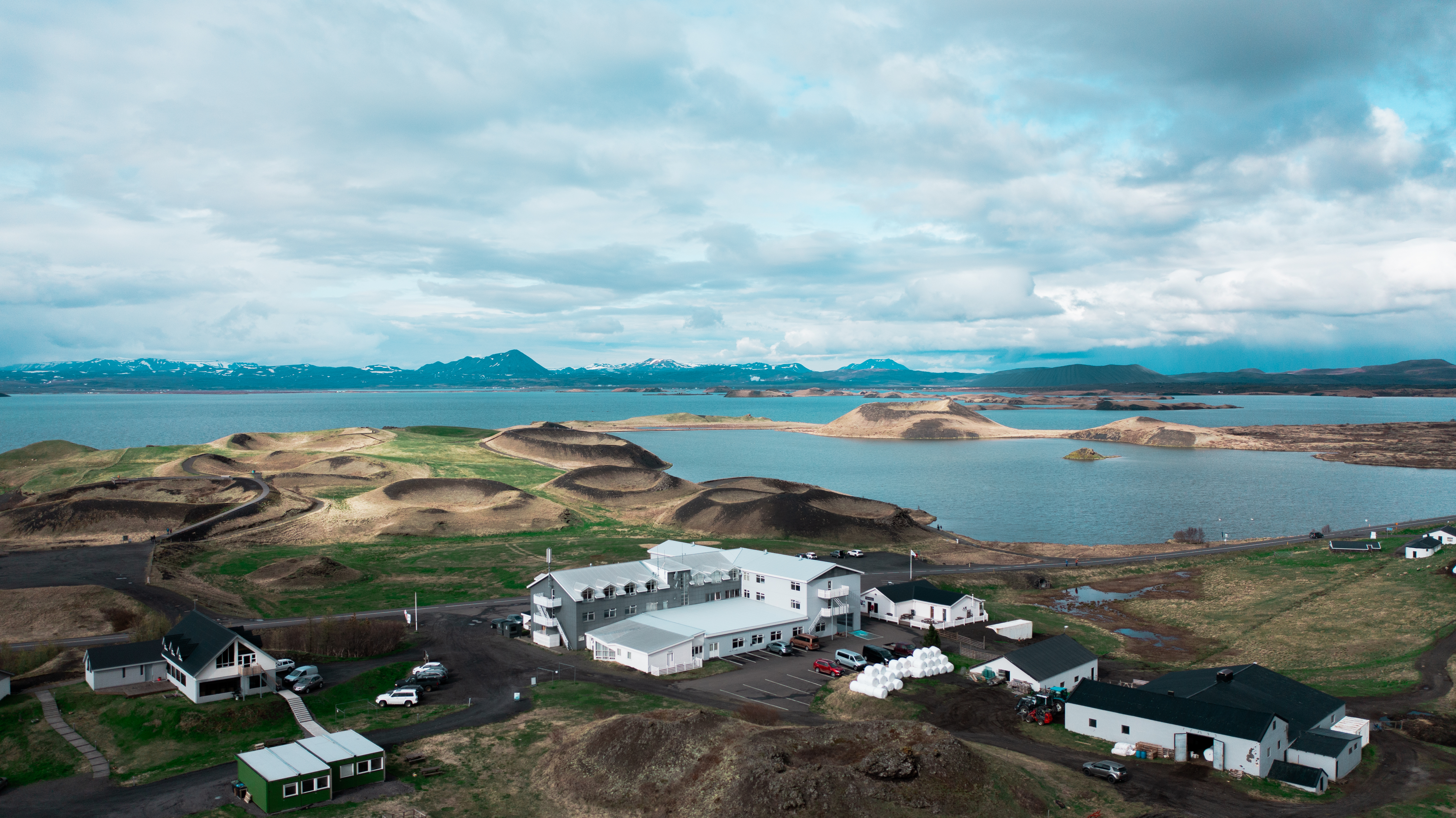
Driving is the most convenient and flexible way to explore the Lake Mývatn area. Most attractions are located within a short driving distance of each other, making the region ideal for self-drive travel.
Here’s what you need to know about when self-driving at Lake Mývatn.
Road conditions
Road conditions around Lake Mývatn are generally good throughout the year. And most attractions are accessible by standard vehicle during the summer. Main roads in the area are paved and well-maintained, particularly along the Ring Road and routes connecting major attractions.
However, gravel roads can still be found in some areas, particularly on routes leading towards the Highlands and more remote locations.
Winter roads
Winter road conditions in the Lake Mývatn area can quickly change due to snow, ice, and wind. Limited daylight hours also play a role. While the main Ring Road is regularly maintained, roads may occasionally become slippery or temporarily affected by severe weather.
A 4x4 vehicle is strongly recommended between November and April, especially for travellers planning to explore more remote areas. Studded winter tyres are commonly used in Iceland during colder months and provide better traction on icy roads.
Before driving, travellers should always check weather forecasts and current road conditions through the Icelandic Meteorological Office and SafeTravel Iceland. During winter storms, road closures and reduced visibility can occur across North Iceland.
Note: Even in early summer, the mountain roads leading to Askja Caldera can still be covered by snow.
Parking
Most major attractions around Lake Mývatn offer designated parking areas, and many are free to use. However, some attractions may charge parking fees, so carrying a payment card or mobile payment option is useful. You can use the EasyPark or Parka app to find and pay for parking.
Fuel stations
Fuel stations are available in Reykjahlíð and the southern part of Lake Mývatn. You can also find one at the east parking area of Goðafoss and in the nearby town of Laugar. Travellers driving longer routes across North Iceland or towards the Highlands should plan fuel stops ahead of time, particularly during winter.
Budget & Costs in Lake Mývatn Area
The cost of visiting Lake Mývatn can vary depending on the season, accommodation type, and travel style. North Iceland is generally quieter than the south. However, prices during summer and winter peak seasons can still be high due to demand.
Accommodation prices
Accommodation prices in the Lake Mývatn area vary depending on the season and property type.
-
Budget hostels and campsites: From around ISK 2,000–18,000 per night
-
Mid-range guesthouses and cottages: Around ISK 20,000–40,000 per night
-
Luxury hotels: Often ISK 50,000+ per night during peak season
Prices are usually highest during the summer, Christmas, New Year, and Northern Lights season.
Food & dining costs
Restaurants and cafés around Lake Mývatn range from casual cafés to full-service hotel restaurants.
-
Coffee and pastries: Around ISK 500–2,000
-
Casual meals like pizzas: Around ISK 2,500–5,000
-
Restaurant dinners: Around ISK 5,000–10,000+ per person
Travellers staying in guesthouses or cottages with kitchens can save money by buying groceries and preparing meals themselves.
Guided tours vs self-drive
Self-driving is often the most flexible option for exploring the Lake Mývatn area, especially when visiting multiple attractions nearby. Rental cars in Iceland typically range from around ISK 5,000–25,000 per day, depending on the season and vehicle type. Heavy-duty 4x4 vehicles usually cost more during winter.
Travellers should also budget for fuel, parking fees at some attractions, and possible insurance add-ons when renting a car. Fuel prices in Iceland are relatively high, particularly for longer road trips around North Iceland.
Guided tours can be a convenient alternative during winter or for visitors wanting local expertise and transport included. Activities such as Northern Lights tours, lava cave tours, snowmobiling, and Askja excursions are commonly available as guided experiences. Prices usually range from around ISK 25,000 to 50,000+, depending on the activity and tour length.
Seasonal pricing
Prices in the Lake Mývatn area change significantly throughout the year.
-
Summer (June–August): Highest accommodation demand and busiest travel season
-
Winter holidays & Northern Lights season: Higher hotel prices and tour demand
-
Spring and autumn: Often quieter with lower accommodation prices and fewer visitors
Booking accommodation and tours early is recommended during peak travel periods.
Tips for Visiting the Lake Mývatn Area
The Lake Mývatn area can be visited year-round, but weather and conditions in North Iceland can change quickly. Here are some useful tips to help you prepare for your trip:
-
Dress in layers: Bring waterproof outdoor clothing, warm thermal layers, and windproof jackets, especially during winter.
-
Wear sturdy walking shoes: Many attractions include gravel paths, geothermal areas, and unpaved hiking trails.
-
Bring a head net during summer: Midges are common around the lake during warmer months, particularly near wetlands and calm water.
-
Check road conditions during winter: Snow and ice can affect driving conditions across North Iceland.
-
Book accommodation early: Hotels and guesthouses often fill up quickly during summer and holiday periods.
-
Stay on marked walking paths: Geothermal areas can be dangerous, and the landscape is fragile and protected.
-
Carry swimwear and a towel: You may want to visit hot springs or geothermal baths during your trip.
-
Stay at least two nights: This allows enough time to explore the Lake Mývatn area at a relaxed pace.
-
Keep a camera ready during winter: Northern Lights sightings can happen unexpectedly on clear nights.
Experience the Wonders of Lake Mývatn
Lake Mývatn is one of the most diverse destinations in Iceland. From steaming geothermal areas to volcanic craters and lava caves, the region offers an unforgettable mix of nature and adventure.
Whether you visit in summer or winter, the Lake Mývatn area offers unique experiences in every season. Visitors can explore volcanic landscapes, relax in geothermal baths, discover local culture, and experience the natural beauty of North Iceland.
Ready to plan your trip? Start building your Mývatn itinerary to explore the best of the region.
FAQs
Is Lake Mývatn worth visiting?
Yes! Lake Mývatn is considered one of the top destinations in North Iceland. It features unique volcanic landscapes, geothermal activity, hot springs, and diverse wildlife.
In which region is Lake Mývatn?
Lake Mývatn is located in North Iceland, east of Akureyri along the Ring Road.
How do you pronounce Lake Mývatn?
Mývatn is roughly pronounced as “MEE-vahtn.”
How long does it take to visit Mývatn?
Many visitors spend one to two days exploring the Lake Mývatn area. However, staying longer allows more time for hiking, sightseeing, and Northern Lights viewing.
Can you swim in Lake Mývatn?
Swimming directly in Lake Mývatn isn’t common, but visitors can enjoy geothermal bathing at the nearby Earth Lagoon Mývatn.
What to see near Lake Mývatn?
Popular attractions near Lake Mývatn include Dimmuborgir Lava Formations, Hverir Geothermal Area, Grjótagjá Cave, Hverfell Crater, and Earth Lagoon Mývatn. Visitors can also explore nearby destinations such as Goðafoss, Dettifoss, Ásbyrgi Canyon, and Húsavík along the Diamond Circle sightseeing route.
What towns are near Lake Mývatn?
Reykjahlíð is the main settlement near Lake Mývatn. Akureyri and Húsavík are also popular nearby towns in North Iceland.