

Mývatn Itinerary: 1-Day, 2-Day & 3-Day Diamond Circle Road Trip
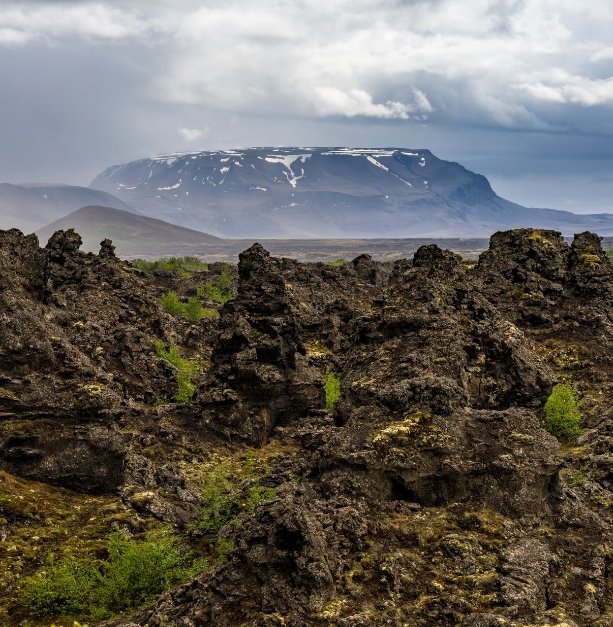
Lake Mývatn is one of the most fascinating regions in North Iceland. While many travellers only stop briefly as they drive Iceland’s Ring Road, the Lake Mývatn area deserves far more time. There’s a surprising amount to see within a short driving distance. The landscape is filled with steaming geothermal vents, pseudocraters, lava caves, waterfalls, hot springs, and peaceful lakeside viewpoints.
The region is also home to the Mývatn Nature Baths, often called the Blue Lagoon of the North. Its geothermal waters and steam baths make it one of the best places to relax after a day of sightseeing.
Whether you’re planning to explore the Diamond Circle or focus on Lake Mývatn, there’s plenty to experience in the area. Below are Mývatn itinerary options that’ll help you make the most of your visit.
1-Day Mývatn Itinerary: Exploring the Top Highlights
This itinerary is ideal for travellers who want to see the highlights of Lake Mývatn in one day. Summer’s long daylight hours make the route easy to follow. Outside the season, plans can be adjusted depending on daylight and weather conditions.
Morning: Birdwatching & nature trails
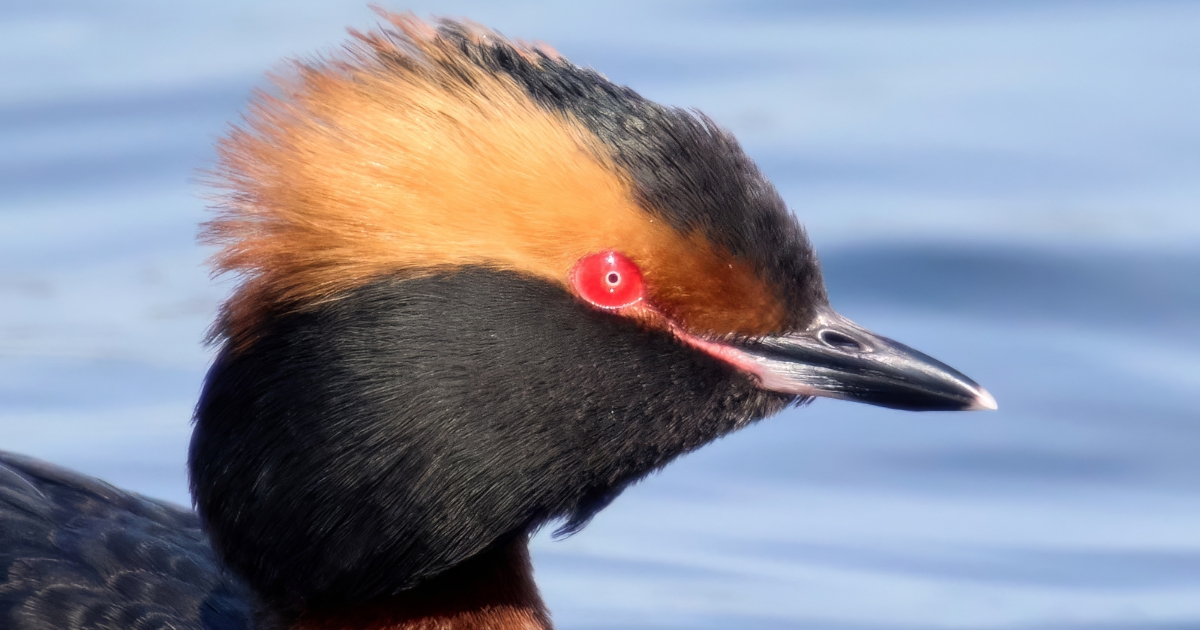
For the best summer birdwatching experience around Lake Mývatn, start the day early.
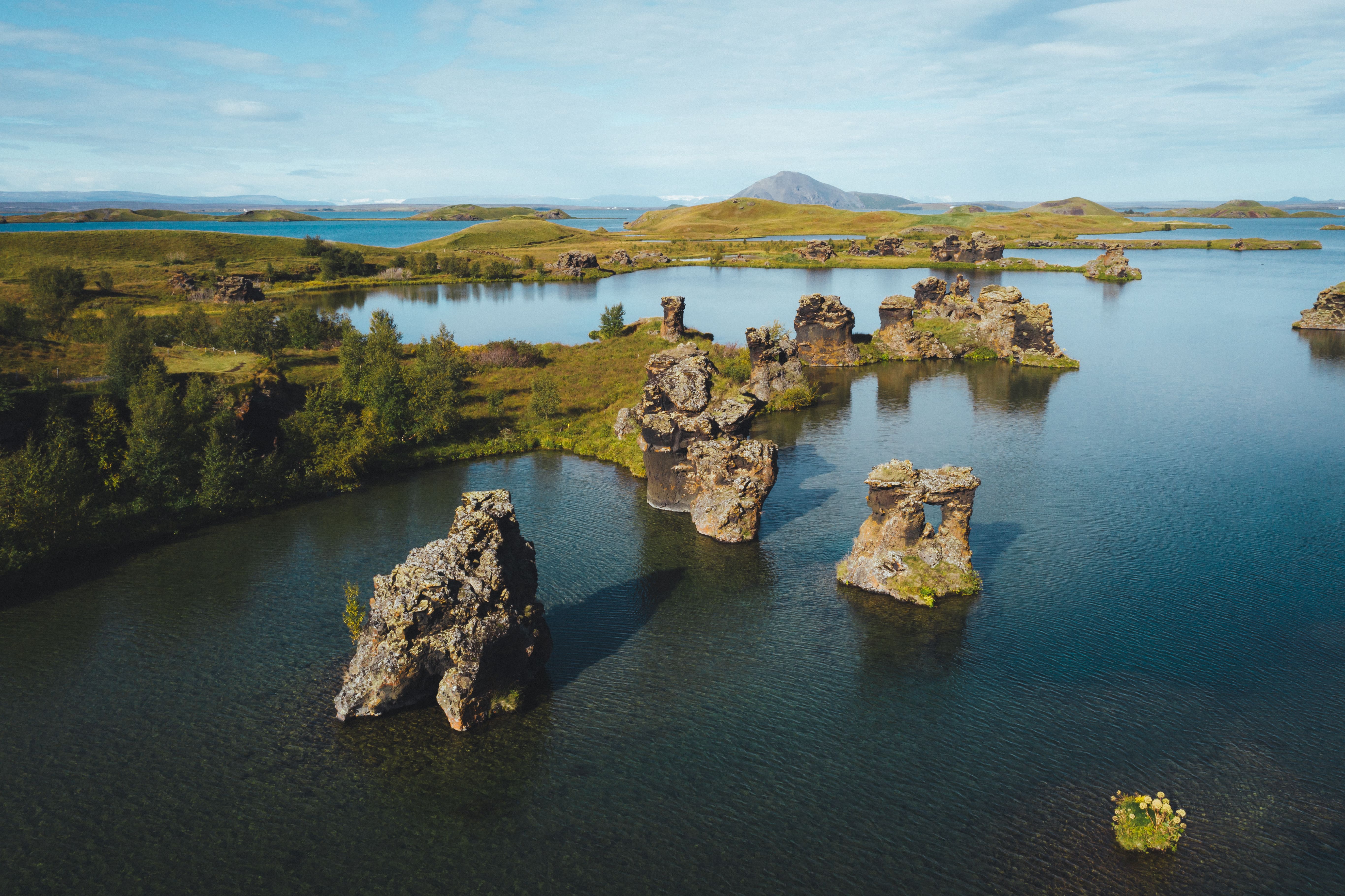
Begin at Höfði Nature Reserve, where quiet walking paths wind through lava formations and lakeside vegetation. The area is known for lava pillars and frequent bird sightings. Allow around one hour for a relaxed walk.
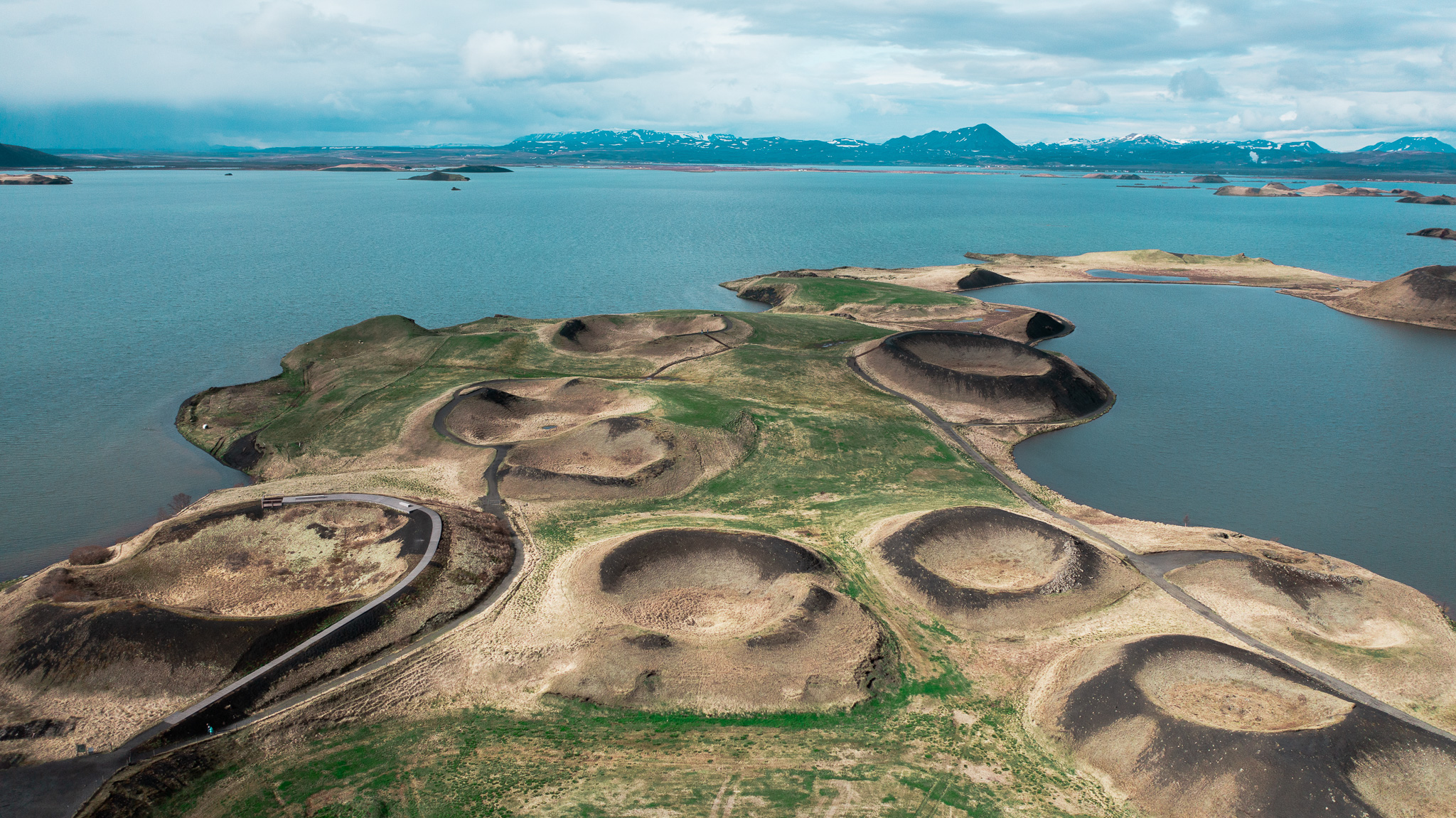
Next, head to Skútustaðagígar pseudocraters on the southern side of the lake. These unusual formations were created by steam explosions thousands of years ago when hot lava flowed across wetlands. Several walking paths lead to elevated viewpoints overlooking Lake Mývatn. Depending on your pace and the trail you choose, you can spend between one and two hours here.
After the morning walks, stop for breakfast at nearby Eldey Restaurant. It usually opens at 7:00 am during the summer months and 8:00 am during winter.
Continue to Dimmuborgir lava formations, one of the top stops around Lake Mývatn. The area contains dramatic lava formations, caves, and walking trails formed during ancient volcanic eruptions. You can explore the Small Circle loop in around 15–20 minutes, while the longer Church Circle trail takes about one hour.
Before lunch, make a final stop at Grjótagjá lava cave. The cave is known for its vivid blue geothermal water and volcanic scenery. Bathing is no longer allowed due to fluctuating water temperatures, but it remains one of the area’s most photogenic stops.
Afternoon: Lunch & geothermal adventure
For lunch, stop at Daddi’s Pizza or Vogafjós Cowshed Cafe near Reykjahlíð. Vogafjós is particularly popular for its locally sourced dishes and its cows.
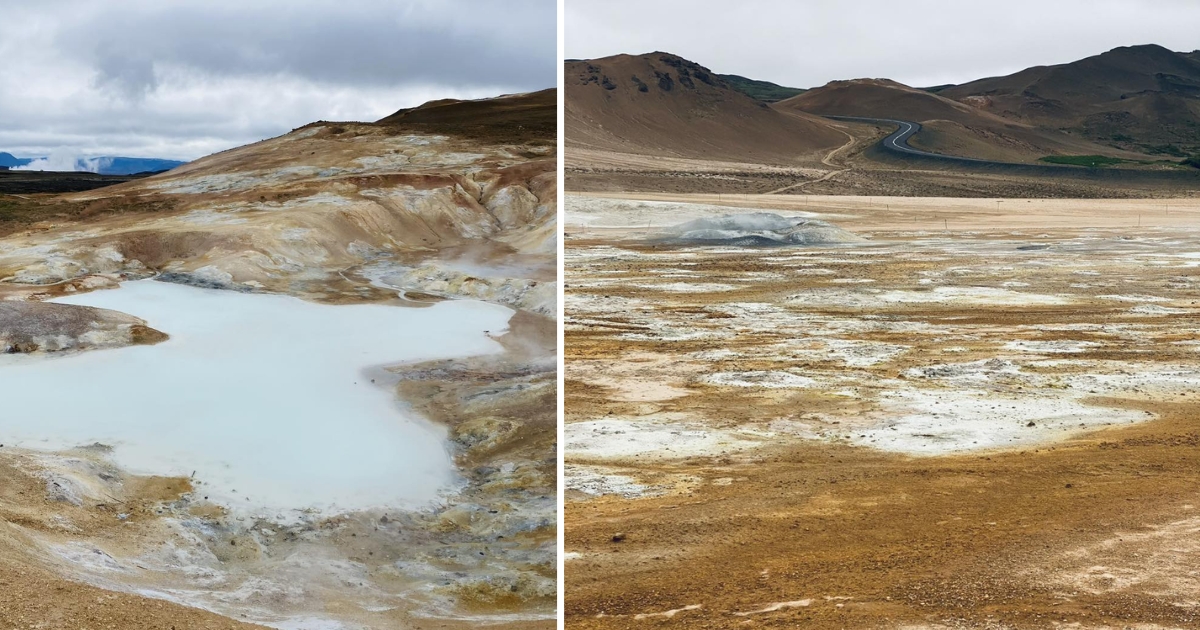
After lunch, continue past the striking Blue Lake before arriving at the Hverir geothermal area. Located at the foot of Námafjall mountain, Hverir is one of Iceland’s most active geothermal landscapes. Steam vents, bubbling mud pools, and colourful mineral deposits create an almost otherworldly atmosphere. Most visitors spend around 30–60 minutes exploring the marked paths.
After visiting Hverir, choose between two nearby volcanic areas depending on your energy level and interests.

Option 1: Leirhnjúkur lava fields
Leirhnjúkur offers one of the most impressive volcanic hikes in North Iceland. The walking trail passes through steaming lava fields, black volcanic rock, and still-warm geothermal terrain created during the Krafla Fires eruptions. The scenery feels raw and constantly changing. Allow around 1–2 hours for the walk.
Option 2: Stóra-Víti crater
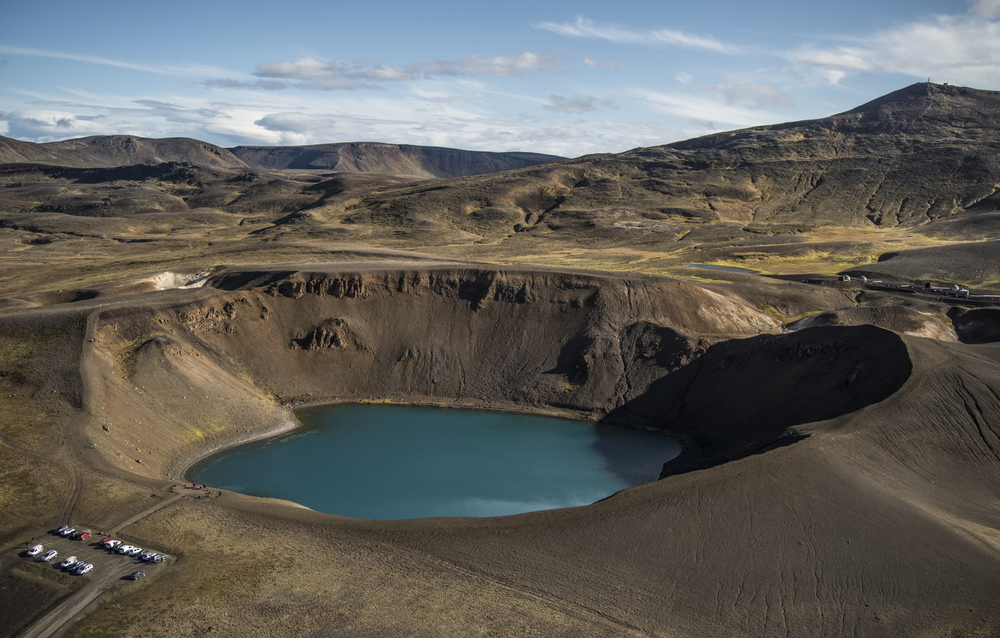
If you prefer a bit farther but a more relaxed stop, continue to Stóra-Víti crater in the Krafla volcanic area. The crater lake’s blue water contrasts beautifully with the surrounding volcanic landscape. Short walking trails and viewpoints make this a good option for travellers wanting scenic views without a longer hike.
After exploring the geothermal areas, return to Reykjahlíð for the evening.
Evening: Mývatn Nature Baths & dinner
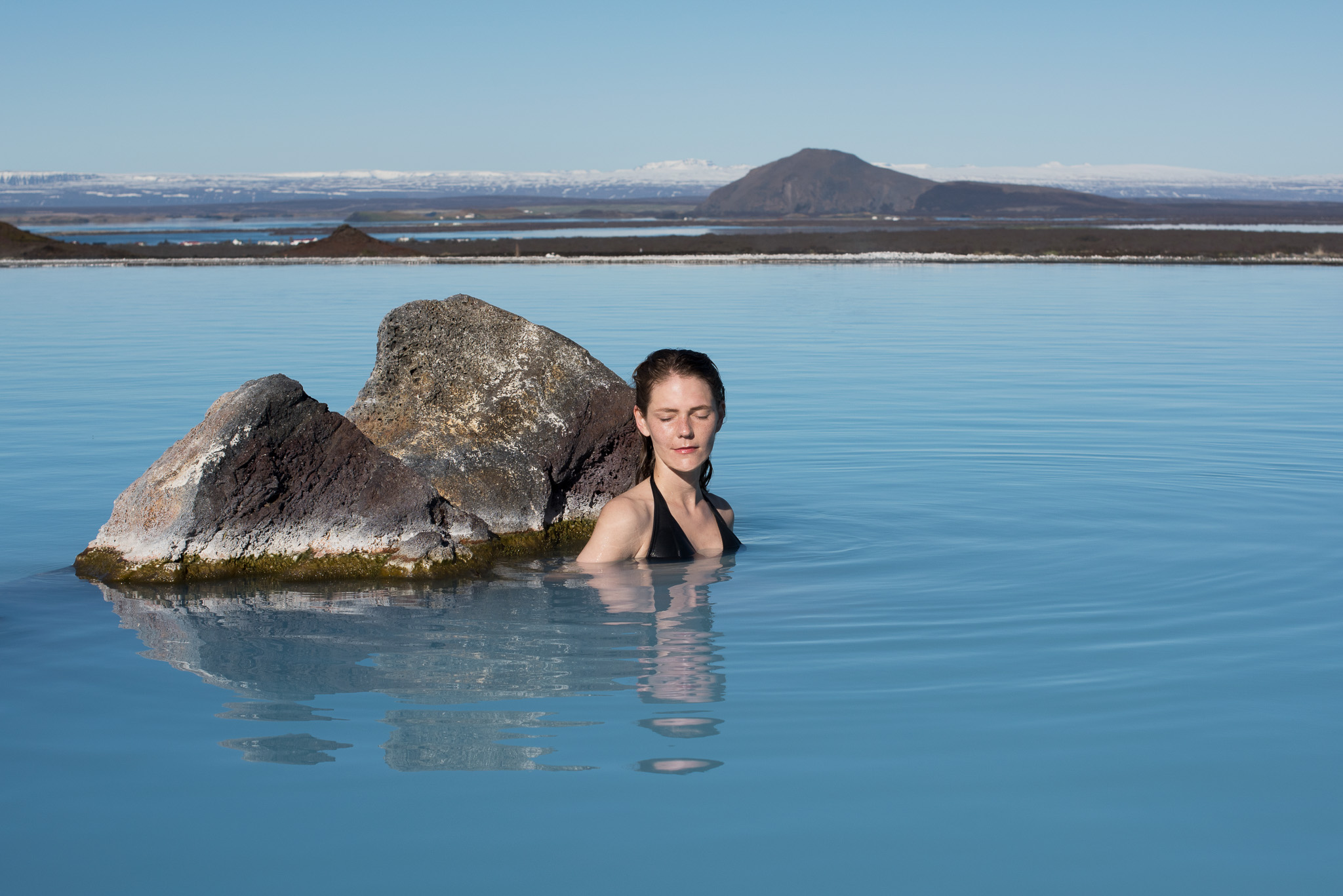
After a full day of sightseeing, head to the Mývatn Nature Baths (now called Earth Lagoon Mývatn).
Often referred to as the Blue Lagoon of the North, the baths are known for their geothermal waters and peaceful atmosphere. The mineral-rich hot spring water is naturally heated and ideal for relaxing tired muscles after hiking.
The complex includes outdoor lagoons, steam baths, changing facilities, and an on-site café. Compared to larger geothermal spas in Iceland, the Mývatn Nature Baths usually feel quieter and less crowded.
Most visitors spend between 2 and 3 hours here, especially during summer evenings when the midnight sun creates soft golden light across the landscape.
For dinner, you can visit Kaffi Kvika (Earth Lagoon Bistro) inside the baths complex. Or return to Reykjahlíð for dinner at Gamli Bærinn or Mylla Restaurant.
2-day Mývatn Itinerary: Top Highlights + Hidden Gems
If you have two days around Lake Mývatn, you can explore the region’s popular attractions while adding several lesser-known experiences.
Day 1: Classic Mývatn itinerary
Follow the same route as the 1-day Mývatn itinerary, including:
-
Höfði and Kálfaströnd
-
Skútustaðagígar pseudocraters
-
Dimmuborgir lava fields
-
Grjótagjá lava cave
-
Hverir geothermal area
-
Either Leirhnjúkur or Stóra-Víti crater
In the evening, travellers looking for a slower evening can also relax at the Mývatn Nature Baths. Or visit the Laugar swimming pool for a more local experience.
If you still feel active, hike Hverfjall crater for panoramic views over Lake Mývatn. The round-trip hike usually takes around 1.5–2 hours and is especially beautiful during the long summer evenings.
Day 2: Nature adventure & animal encounters
After exploring Lake Mývatn’s main attractions, spend the second day discovering some of the region’s more adventurous and lesser-known experiences.
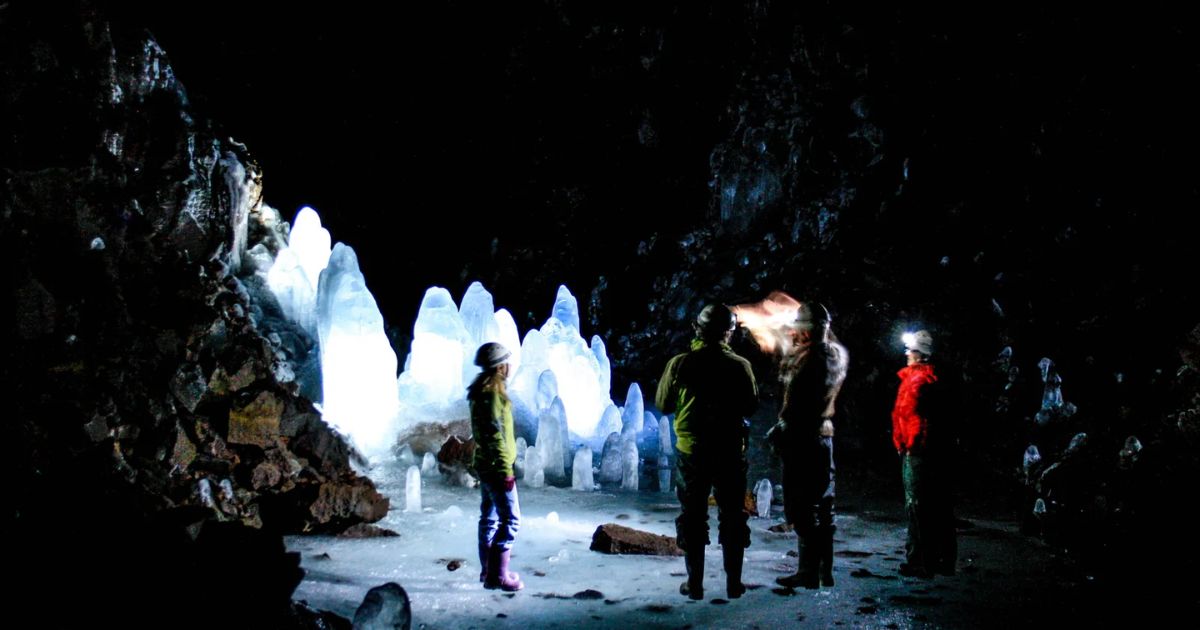
Morning: Lofthellir ice cave tour
Start the day with a guided Lofthellir ice cave tour. This tour can be booked on the website of local operator Geo Travel, who are the only travel operators allowed into the cave.
Lofthellir is one of Iceland’s most remarkable lava caves and contains ancient ice formations hidden deep underground. The tour usually takes between four and five hours and includes rough terrain, volcanic landscapes, and cave exploration.
Even during summer, the cave remains freezing year-round, so warm layers and sturdy shoes are strongly recommended.
Afternoon: Waterfalls or animal encounters
After returning from the cave tour, enjoy a late lunch near Reykjahlíð before choosing between two different afternoon routes.
Option 1: Chasing waterfalls
Travellers interested in scenic drives and nature photography can explore:
-
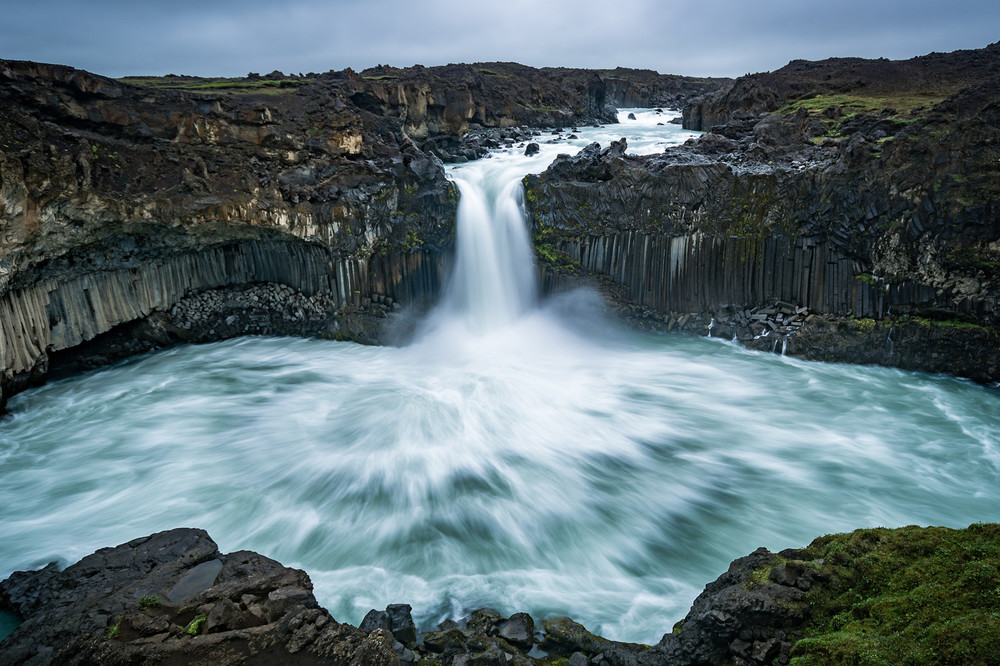
Aldeyjarfoss, framed by dark basalt columns
-
Hrafnabjargafoss, surrounded by volcanic landscapes
These must-see waterfalls near Lake Mývatn are less crowded than some of Iceland’s more famous attractions. And in winter, parts of the waterfalls freeze, creating a striking contrast against the surrounding volcanic landscape.
Option 2: Nature & animal encounters
For a slower-paced afternoon, visit:
-
Snow Dogs kennel, where you can pet Siberian huskies
-
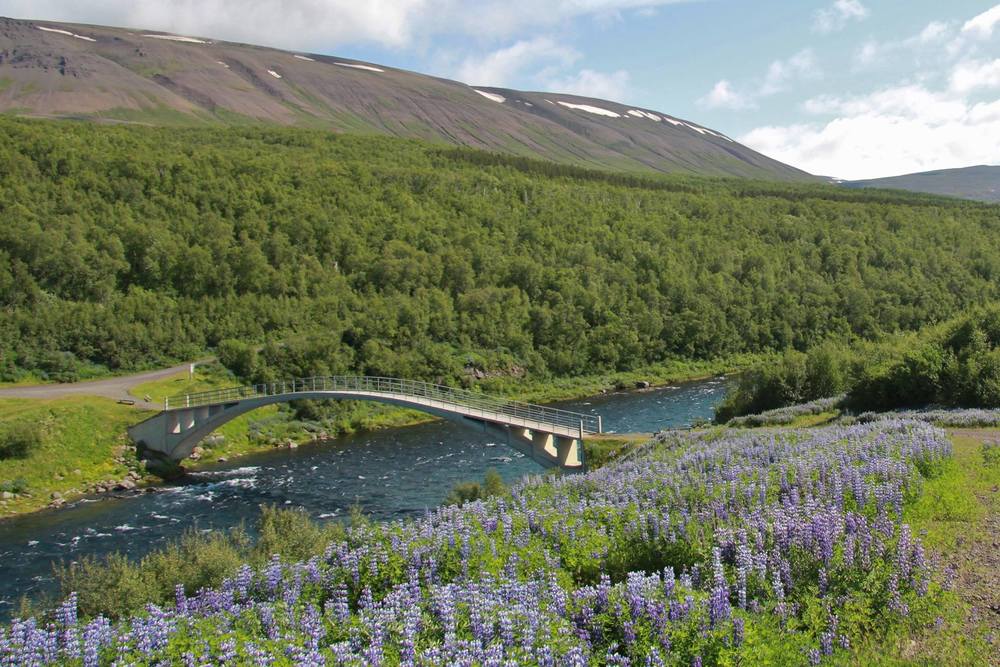
Vaglaskógur Forest, where you can walk among birch trees
-
Petting Zoo Daladýrð, where you can meet Icelandic sheep, cows, horses, rabbits, and more
You can also stop at the Grenjaðarstaður old turf house museum along the route, if you are excited to learn about Icelandic cultural heritage.
This option works particularly well for families or travellers wanting a quieter day after the Lofthellir ice cave tour.
Tip: For these types of adventures, you can either self-drive or arrange a private tour. Local guides such as Kristinn Ingi Pétursson can provide a more convenient and personalised experience.
Evening: Mývatn Nature Baths & late-evening birdwatching
Spend the evening relaxing at the Mývatn Nature Baths. Travellers looking for a more local experience may also enjoy visiting Sundlaug Laugum, a public geothermal pool near Lake Mývatn.
Birdlife in Lake Mývatn is also active on summer evenings, thanks to long daylight hours. For late-evening birdwatching and scenic views, head back towards Höfði viewpoint. During summer, the soft midnight light creates beautiful reflections across the water and surrounding lava formations.
Optional Extension: Askja Caldera adventure
If you have an extra day in North Iceland, consider staying another night and joining a full-day Askja caldera tour.
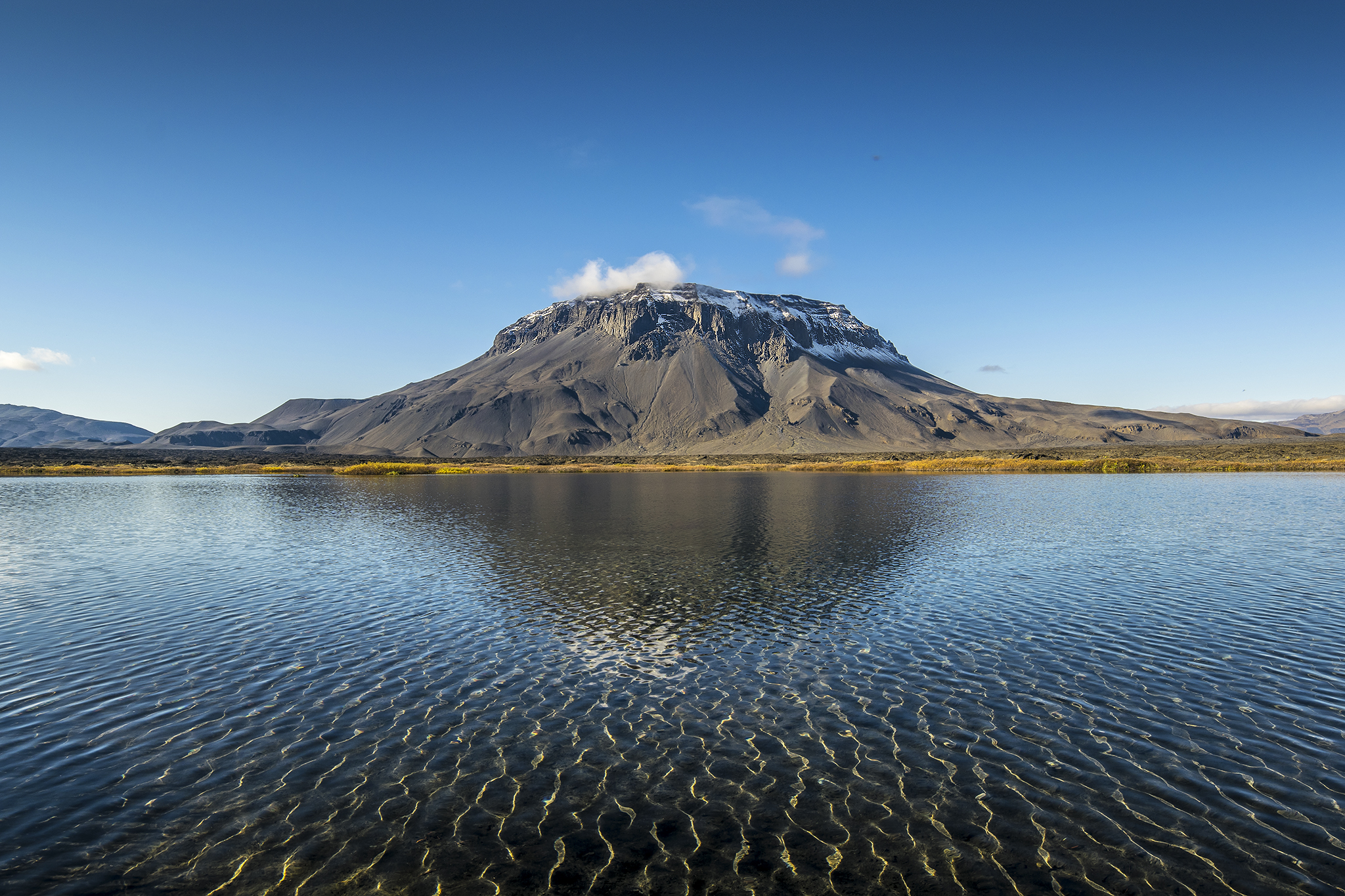
Located deep in the Icelandic Highlands, Askja is known for its dramatic volcanic landscapes and deep turquoise crater lake. Tours typically depart from the Mývatn area during the summer months and travel into the Highlands by 4x4 bus.
Travellers can either self-drive in a suitable 4x4 vehicle or join guided tours with operators such as Mývatn Tours. Local guide Kristinn Ingi Pétursson is also offers trips to the highlands, with a more personalized experience.
Complete 3-Day Diamond Circle Road Trip
The Diamond Circle is one of the best sightseeing routes in North Iceland. The route connects several of the region’s most impressive natural attractions, including waterfalls, volcanic landscapes, coastal towns, and canyon viewpoints.
Day 1: Goðafoss & Lake Mývatn
Begin the journey at Goðafoss Waterfall, located along the Ring Road between Akureyri and Lake Mývatn. The waterfall is easily accessible and makes a perfect first stop when entering the region.
From there, continue to the Lake Mývatn area and spend the rest of the day exploring:
-
Skútustaðagígar
-
Dimmuborgir
-
Grjótagjá
-
Hverir
-
Mývatn Nature Baths
Stay overnight around Lake Mývatn. For luxury stays, popular options include Laxá Hótel and Berjaya Mývatn Hotel. Travellers looking for cosy guesthouses and farm stays can consider Vogafjós Farm Resort or Dimmuborgir Guesthouse. During summer, campsites near Reykjahlíð, like Hlíð Camping, are also available for travellers exploring the Ring Road.
Day 2: Dettifoss, Selfoss & Ásbyrgi Canyon
Spend the second day exploring the northern section of the Diamond Circle.
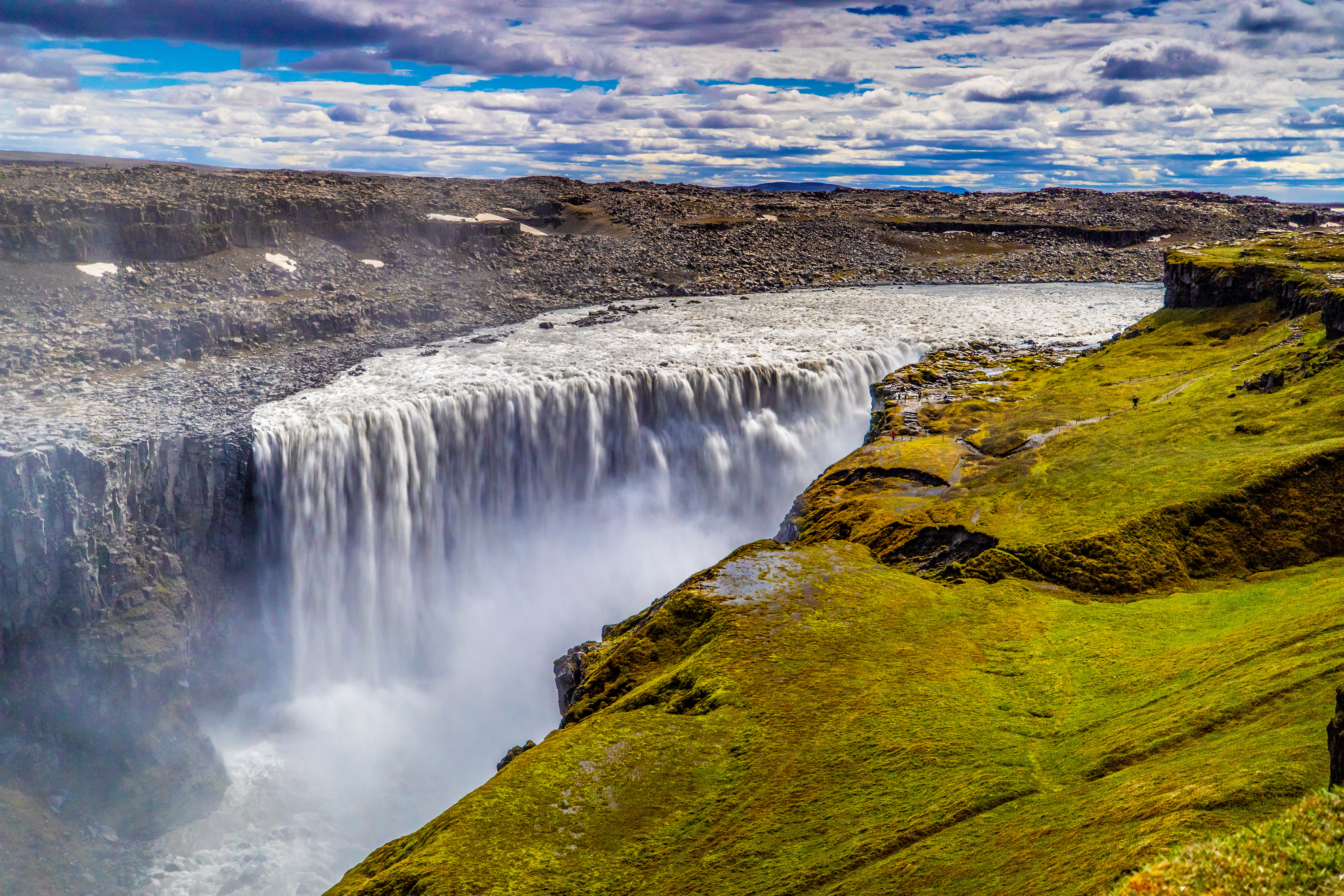
Start with Dettifoss, Europe’s most powerful waterfall, followed by nearby Selfoss waterfall. Continue north towards Ásbyrgi canyon, a horseshoe-shaped canyon surrounded by steep cliffs and forested walking trails.
After exploring the canyon, drive to Húsavík for the evening.
Stay overnight in Húsavík.
Day 3: Húsavík & coastal adventures
Húsavík is widely known as Iceland’s whale watching capital and is one of the highlights of North Iceland.
Spend the day exploring the harbour, joining a whale watching tour, or relaxing at GeoSea Baths overlooking Skjálfandi Bay.
The town also has several museums, cafés, and coastal walking paths. Take time exploring these spots and enjoy a slower final day before continuing your journey around Iceland.
Experience the Beauty of the Lake Mývatn Area
The Lake Mývatn area offers some of the most varied landscapes in Iceland within a relatively small region. From geothermal areas and volcanic craters to waterfalls and birdlife, there’s far more to explore here than many travellers expect.
Whether you only have one day or several days in North Iceland, slowing down and spending extra time around Lake Mývatn allows you to experience a quieter and more diverse side of Iceland.
After long hikes and scenic drives, ending the day at the Mývatn Nature Baths is especially rewarding. It offers a perfect way to relax while taking in the unique volcanic landscape of North Iceland.
If you need more help planning, check out our travel guide to Lake Mývatn for practical and local tips.
FAQs
Is Lake Mývatn worth visiting?
Yes, Lake Mývatn is one of the most unique destinations in Iceland. It offers a mix of volcanic landscapes, geothermal wonders, birdwatching opportunities, and scenic hiking trails. It’s also one of the main highlights of the Diamond Circle sightseeing route and the Northern Lights capital of Iceland.
How many days should you spend in Mývatn?
One full day is enough to explore the top things to do around Lake Mývatn. However, spending two or three days allows for a more relaxed experience. It also gives travellers more time to visit nearby areas, such as Aldeyjarfoss waterfall and Askja caldera.
Can you walk around Lake Mývatn?
You can explore many walking and hiking routes around Lake Mývatn, particularly around Höfði, Dimmuborgir, and Skútustaðagígar. However, there’s no single continuous walking path around the entire lake.
How long can you stay at Mývatn Nature Baths?
There’s no strict time limit for most visitors at the Mývatn Nature Baths. Many travellers spend between two and three hours enjoying the geothermal waters, steam room, and on-site cafe.
Do you need to book Mývatn Nature Baths in advance?
Yes, booking in advance is recommended at Mývatn Nature Baths during summer and peak travel periods, especially for evening visits. Outside the busy season, visitors can usually walk in and enjoy the facilities until closing time.