

Can You See the Northern Lights in Iceland in August?
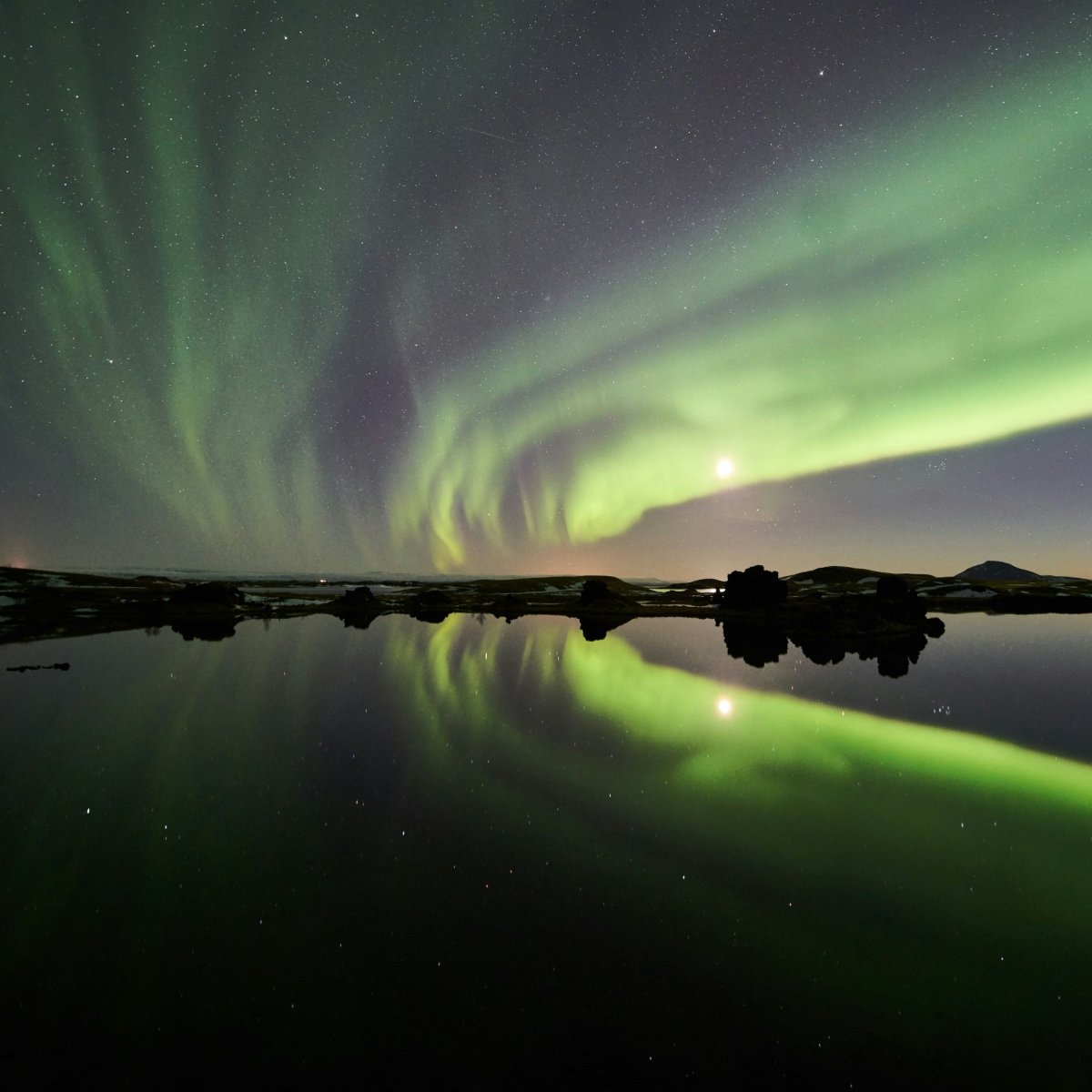
Can You See the Northern Lights in Iceland in August?
August is a month of transition in Iceland. The endless daylight of summer begins to fade; the midnight sun slowly disappears, and darkness starts to return to the night sky. While much of the country is still enjoying long, bright evenings, North Iceland is among the first regions where the conditions for viewing the northern lights begin to emerge.
That is especially true around Lake Mývatn. Known for its volcanic landscapes, geothermal wonders, and dark skies, the area is often one of the first places in Iceland where travellers have a realistic chance of spotting the aurora borealis after summer. So, can you see the northern lights in Iceland in August? The answer is yes, particularly in the second half of the month. Here's why Mývatn is one of the best places to look for the season's first aurora displays.
How Likely Is It to See the Northern Lights in Iceland in August?
In the first half of August, the chances are low across Iceland. The midnight sun is still fading, and the sky rarely gets dark enough for the aurora to be visible. By the second half of the month, that changes. Darkness starts to return, solar activity picks up seasonally, and the conditions for viewing the northern lights begin to fall into place.
It is not peak aurora season. That comes in September through March. But late August is far from a write-off. On a clear night with strong aurora activity, the northern lights are visible in Iceland in August. The key is knowing where to go.
North Iceland gets darker earlier in the season than the south. While Reykjavík and the Golden Circle area are still dealing with lingering twilight, places further north are already seeing proper dark skies. That makes location one of the biggest factors in whether you see the aurora in August at all.
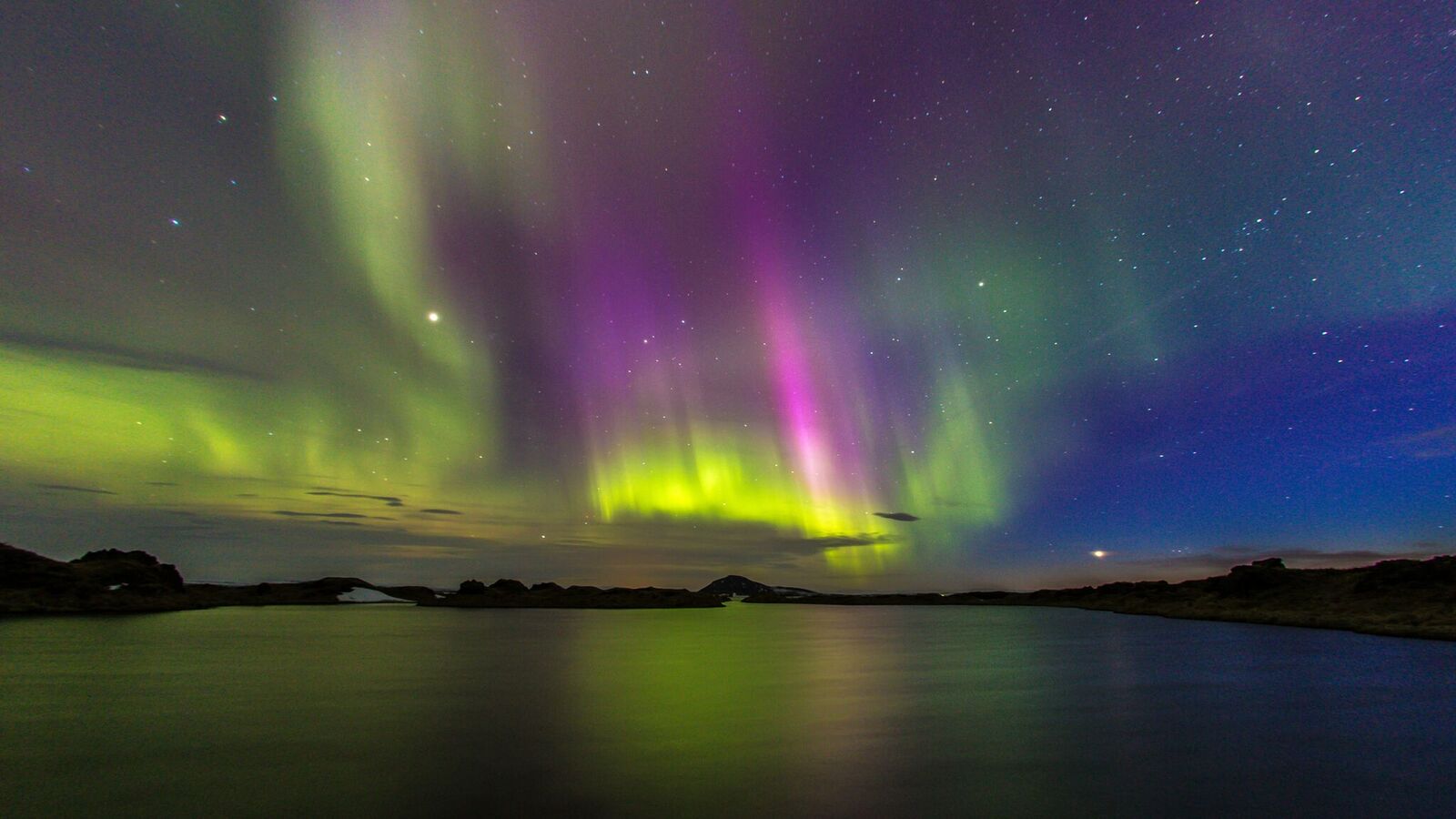
Why Mývatn Is One of the First Places to See the Northern Lights Each Season
Mývatn is often called the Northern Lights Capital of Iceland. That reputation comes down to a few consistent factors that set it apart from the more visited areas in the south.
1. Low light pollution
There are no city lights around Lake Mývatn, and the land is open in every direction. Even a faint aurora is much easier to spot here than it would be near a town or busy resort. That makes Mývatn one of the best places to catch early-season aurora activity.
2. More stable skies
North Iceland gets less cloud cover in autumn than the south of the country. Since clouds block the aurora completely, clearer skies mean better viewing conditions. That gives Mývatn a natural advantage for watching the northern lights.
3. Darker nights, earlier
Because Mývatn sits further north, the dark nights of autumn return here before they do in Reykjavík or the Golden Circle area. That means the aurora season quietly starts at Mývatn before many travellers in the south are even looking up.
4. A dramatic backdrop
Few places in Iceland offer a backdrop like Mývatn. The volcanic lava fields, the open lake surface, and the wide geothermal landscape all add depth to an aurora display. A northern lights show here looks very different from anything you would see near the coast.
Iceland Northern Lights and Aurora Forecasts
Before heading out at night, check the aurora forecast. The Icelandic Meteorological Office (vedur.is) publishes a daily forecast that combines solar activity levels with cloud cover predictions. It is the most reliable tool for planning an evening out at Mývatn.
Aurora activity is measured on a scale from zero to nine, known as the Kp index. At Mývatn's latitude, a Kp of two or three produces visible displays when viewing conditions are clear. During periods of high solar activity, even a Kp of one can produce something visible.
How Accurate Are the Aurora Forecasts for Iceland?
Aurora forecasts are a useful tool when planning a northern lights outing, especially during late August when viewing opportunities are more limited. Forecasts one to two days ahead tend to be the most reliable, combining real-time solar activity data with cloud cover predictions. The Icelandic Met Office provides regularly updated forecasts that can help you decide whether conditions are favourable on a given night.
However, forecasts are not a guarantee. Cloud cover is often the biggest factor, and even a strong aurora can be hidden behind an overcast sky. Conditions in North Iceland can change quickly, so it is worth checking both the aurora and local weather forecasts each evening. Staying at least three nights significantly improves your chances of seeing the northern lights in Iceland during this period, giving you more flexibility if cloud cover affects viewing conditions.
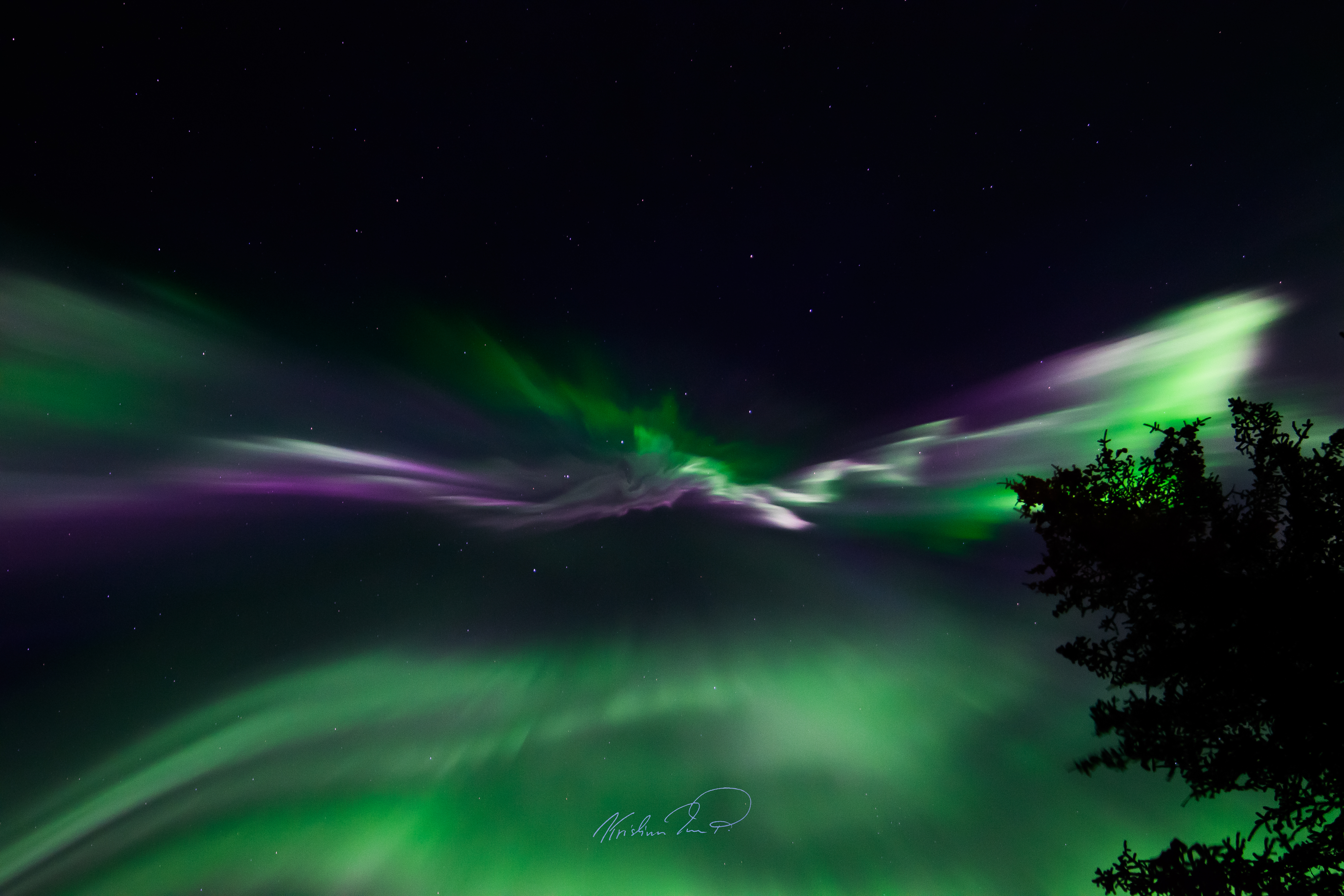
Why Is Mývatn One of the First Places to See the Northern Lights?
The days in late August are still long enough for full exploration. While you are waiting for dark skies each evening, there is a wide range of things to see and do in Mývatn.
- Hverfjall crater: Walk the rim of this circular crater, 1,000 m (3,281 ft) wide and 140 m (459 ft) deep. The full loop takes about an hour and offers wide views of Lake Mývatn and the surrounding lava fields.
- Hverir geothermal field: Explore an active geothermal area of steaming vents and bubbling mud pots behind Námaskarð. Temperatures here exceed 200°C (392°F), and the colours of the ground are unlike anything else in Iceland.
- Dimmuborgir lava formations: See ancient lava pillars and arches up close at Dimmuborgir, formed around 2,300 years ago. Several marked walking routes cross the area, ranging from short 20-minute loops to longer trails.
- Höfði promontory: Stand at the lake shore and look out over the lava formations rising from the water. At dusk in late August, this is one of the quieter spots to watch the sky begin to darken.
- Jarðböðin nature baths: Soak in geothermal waters set against the hills above Lake Mývatn. The outdoor setting makes it one of the best places to be when the aurora begins to appear in the evening sky.
Mývatn Tours runs dedicated northern lights tours that drive away from the village lights of Reykjahlíð to find the best viewing spot each night. Geo Travel also offers aurora tours where guides track real-time aurora activity and cloud cover data during the day to choose the best location for the evening.
Planning Your Late-August Stay at Mývatn
Late August sits between summer and autumn. Daytime temperatures are typically around 50°F to 59°F (10°C to 15°C), and evenings cool off quickly. Layering is important, particularly if you plan to be outside after midnight.
A few practical points for planning your trip to Mývatn:
- Stay at least three nights. This gives you the flexibility to wait out cloudy evenings and catch a clear one.
- Check forecasts nightly. Conditions change quickly in North Iceland. Check both aurora activity and cloud cover before heading out each evening.
- Drive away from any roadside lighting. Even at Mývatn, moving a kilometre or two from any building improves your view.
- Let your eyes adjust. It takes around 20 minutes for your eyes to fully adapt to the night sky. Avoid looking at your phone screen while you wait.
- Dress warmly. Late-August nights can drop to near freezing. Bring more layers than you think you need.
For accommodation close to the viewing areas, options include Hótel Laxá, Vogafjós, Skútustaðir Guesthouse, and Stöng Guesthouse. If you want to watch the aurora from your room, Sel Hótel Mývatn has large windows facing the open sky and offers a northern lights wake-up service for guests.
Plan Your Late-August Aurora Trip to Mývatn
Late August is earlier than most people expect for the northern lights in Iceland, and Mývatn is the right place to be when the season begins. The dark skies, low light pollution, and northerly position all work in your favour.
To make the most of your visit, stay a few nights, check the aurora forecast and weather forecast each evening, and find a spot away from any light source. Check the accommodation options in Mývatn to find a base that suits your trip.
FAQs
What time of night is best to see the northern lights in Iceland?
Aurora activity peaks between 9 pm and 2 am. In late August at Mývatn, the window is narrower and sits closer to midnight.
What is the best month to see the northern lights in Iceland if not August?
September and March are the strongest months, partly due to the Russell-McPherron effect, which increases geomagnetic activity near the equinoxes.
Do you need a car to see the northern lights at Mývatn?
A rental car gives you the most flexibility. Mývatn Tours is a good alternative if you prefer not to drive after dark.
What colours appear in the northern lights over Iceland?
Green is the most common colour. Red, blue, and purple are also possible during strong aurora activity, though less frequently.
Can you photograph the northern lights in late August at Mývatn?
Yes. Use a wide aperture around f/2.8, ISO between 1,600 and 3,200, and a shutter speed of 10 to 25 seconds on a tripod.
What is the Russell-McPherron effect, and how does it affect aurora viewing?
It is a geomagnetic phenomenon that peaks near the spring and autumn equinoxes, causing more frequent and intense aurora displays.
Is early August too bright to see the northern lights anywhere in Iceland?
Yes. Meaningful darkness does not return to North Iceland until mid-August. The final week of the month is the earliest realistic window.